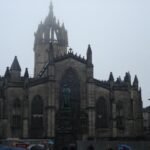
1st September 714: St Giles, patron saint of Edinburgh and Elgin, died.
St Giles Feast Day. Edinburgh’s Cathedral is St Giles.
Source: The Scottish Invention of America, Democracy and Human Rights, Klieforth and Munro, 2004, ISBN 0-7618-2791
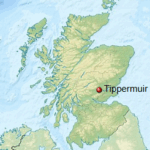
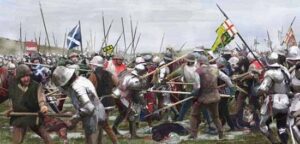
1st September 1644: The Battle of Tippermuir. Montrose victory over the Covenanters.
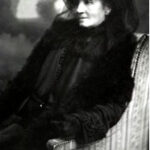
1st September 1863: Violet Augusta Mary Frederica Kennedy-Erskine later the Angus poet Violet Jacob, author of “The Wild Geese”, born.
3rd September 1719: Solemnization of the Marriage of James Francis Edward Stuart (The Old Pretender) and Princess Maria Clementina Sobieska.
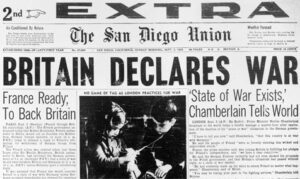
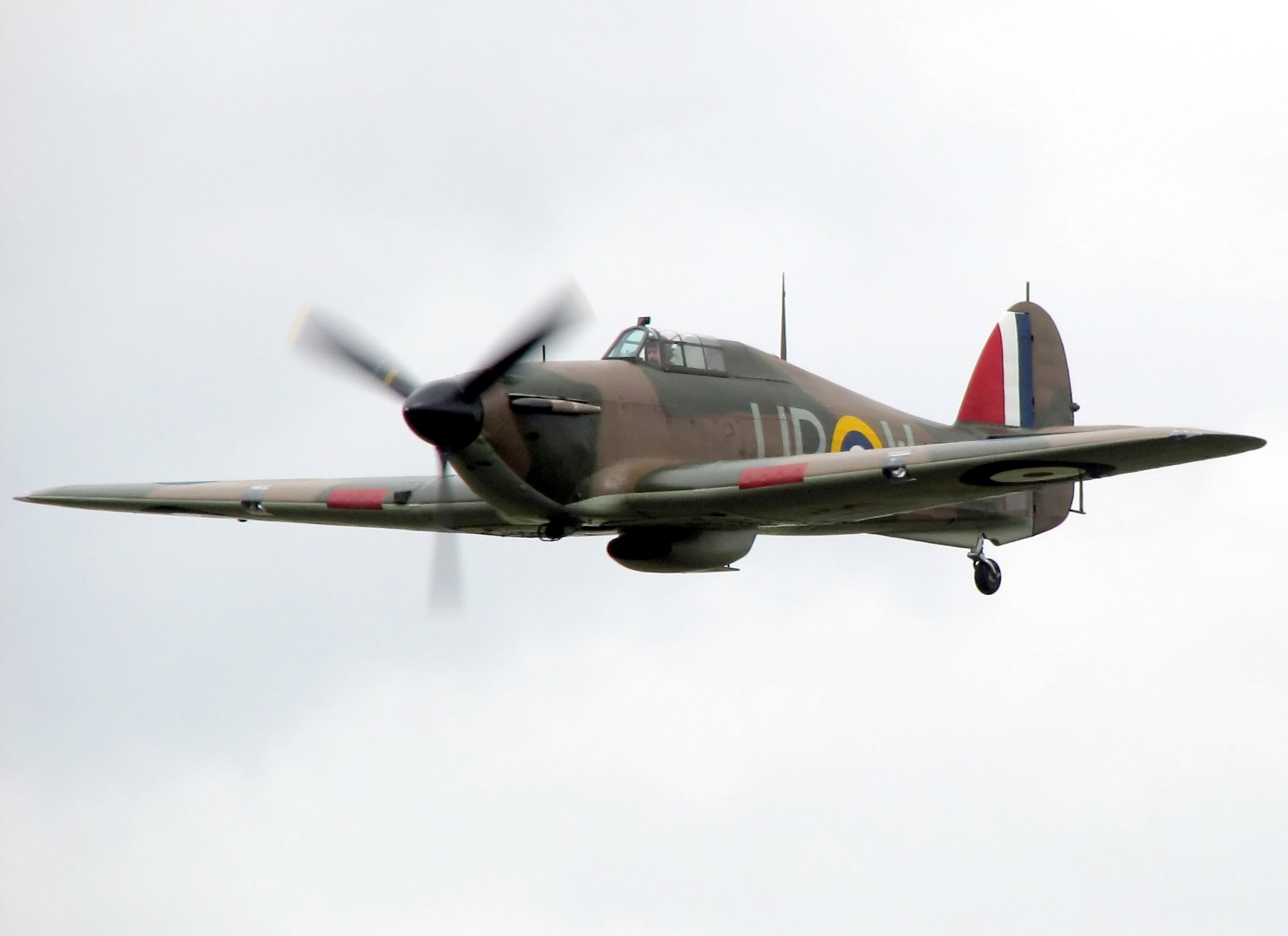
3rd September 1939: Britain and France declare war on Germany. Neville Chamberlain announces to the British people: “This morning the British Ambassador in Berlin handed the German government a final note, stating that unless we heard from them – by 11 o’clock – that they were prepared at once to withdraw their troops from Poland, a state of war would exist between us; I have to tell you now that no such undertaking has been received and that, consequently, this country is at war with Germany.”
Audio Clip
5th September 1750: Robert Ferguson, Scots writer born in Edinburgh.
Robert Ferguson on Jeff Nisbet’s Edinburgh – Facebook Page
5th September 1808: John Home, Scots writer, minister and historian, died at Merchiston Bank, near Edinburgh.
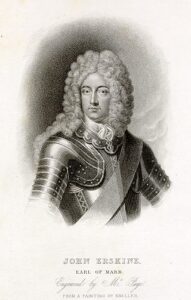
6th September 1715: John Erskine, the 6th Earl of Mar,”Bobbing John”, raised the Standard for James Francis Edward Stuart, the “Old Pretender” at the Braes o’ Mar, at the start of the 1715 Rising.
Braemar, Scotland : History & Folklore
6th September 1876: John James Richard Macleod, discoverer of insulin, born near Dunkeld.
6th September 1914: The start of the Battle of The Marne which halted the German advance into France. While this is seen as a French victory, the BEF (British Expeditionary Force) under General French played a prominent part.
7th September 1306: Sir Simon Fraser (The Patriot), captured at St John’s Town was hanged, drawn and quartered in London and his head was displayed on London Bridge alongside William Wallace’s.
Sir Herbert Morham and Thomas Le Boys were beheaded at the Tower for supporting the Scots’ Cause. Sir Christopher Seton, a Yorkshire knight married to Bruce’s sister Christian, also captured at St John’s Town was hanged, cut down and beheaded.
7th September 1775: John Leyden, poet and orientalist, was born at Denholm.
8th September 1650: Princess Elizabeth, daughter of Charles I, died of neglect at Carisbrooke Castle on the Isle of Wight and was buried at Newport Parish Church, Sts Thomas.
9th September 1543: Mary Queen of Scots crowned at Stirling Castle.
9th September 1758: Alexander Nasmyth, Scots painter, born in Edinburgh.
10th September 1763: James Thomson born. He wrote chiefly in the local vernacular describing Currie. He died in 1832.
12th September 1848: William McNab, the curator of the Royal Botanic Garden Edinburgh, who moved the garden to its current location at Inverleith Row, died.
Source: The Scottish Invention of America, Democracy and Human Rights By Alexander Leslie Klieforth, Robert John Munro ISBN-10: 0761827919
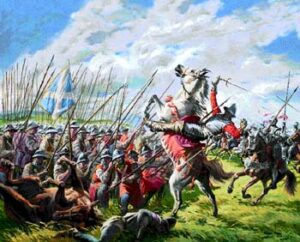
13th September 1644: The Battle of Aberdeen. The Marquis of Montrose captures the city from the Covenanters led by Lord Burleigh.
16th September 1701: James VII and II died in exile at St Germain-en-Laye, outside Paris.
Map of St Germain-en-Laye
18th September 1643: Gilbert Burnet, Bishop of Salisbury and Historian, born in Edinburgh.
19th September 1806: William Dyce, artist, born in Aberdeen. Aberdeen‘s Dyce Airport is named after him.
19th September 1859: Professor John Pringle Nichol, author of “The Architecture of the Heavens” died.
20th September 1967: The “RMS QUEEN ELIZABETH 2”, “QE2” was launched by HM The Queen at John Brown and Co’s yard, Clydebank.
21st September 1756: John Loudon MacAdam who introduced the “macadam” or “tarmac” system of road surfacing, was born in Ayr.
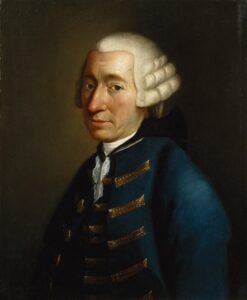
22nd September 1834 : Thomas Telford, the civil engineer died.
24th September 1332 : Edward Balliol, son of John Balliol, crowned at Scone. He was regarded by many as the legitimate successor, but was chased out of Scotland and sought refuge in England.