1st August 1545: Andrew Melville born Baldovie. Scholar, theologian and religious reformer, his reputation brought scholars from the Europe to study at Glasgow and St Andrews.
1st August 1714: Death of Queen Anne; George I, Elector of Hanover becomes King.
3rd August 1573: Sir William Kirkcaldy of Grange executed, after defending Edinburgh Castle on behalf of Mary Queen of Scots from May 1568 to May 1573.
4th August 1900: Elizabeth Bowes-Lyon, the future Queen Elizabeth, the Queen Mother, born.
4th August 1914: Britain declared war on Germany.
His Majesty’s Government informed the German Government on August 4th, 1914, that, unless a satisfactory reply to the request of His Majesty’s Government for an assurance that Germany would respect the neutrality of Belgium was received by midnight of that day, His Majesty’s Government would feel bound to take all steps in their power to uphold that neutrality and the observance of a treaty to which Germany was as much a party as Great Britain.
The result of this communication having been that His Majesty’s Ambassador at Berlin had to ask for his passports, His Majesty’s Government have accordingly formally notified the German Government that a state of war exists between the two countries, as from 11 p.m. to-day.
The First World War had begun on 28th July 1914 with Austria-Hungary’s declaration of war with Serbia.
5th August 1305: Sir William Wallace betrayed and handed over to the English.
5th August 1388: Battle of Otterburn in which Scots defeat Henry Percy, (Hotspur) but James, Earl Douglas, died out of sight of his army. “A dead man won the field”. Sir John Sinclair, Sir Walter Sinclair and Sir James Lindsay took up the dying Douglas’s banner and went back into the battle crying “Douglas”. Tom Steel, Scotland’s Story ISBN 0006370039 p 57 (English sources say the battle was on 19th August: John Sadler, Border Fury, England and Scotland at War 1296-1568 ISBN 1405840226 p 275.
11th August 1892: Hugh MacDiarmid (Christopher Murray Grieve) born in Langholm in Dumfriesshire.
12th August 1332: Battle of Dupplin Moor near Perth in which Edward Balliol defeated the Regent, Earl of Mar.
12th August 1990: Roy Williamson, Scottish folk musician and songwriter, died. A founder member of the folk group, “The Corries”, for whom he wrote the song which has since become Scotland’s unofficial National Anthem, “Flower of Scotland”.
The Corries
13th August 1888: John Logie Baird, inventor of the first television, born in Helensburgh.
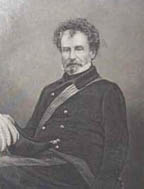
14th August 1863: Sir Colin Campbell died. Born Colin MacIver, he adopted the surname of his uncle who sponsored his military education. At the Battle of Balaclava in 1854 as Commander of the Highland Brigade of the 1st Division he lead the 93rd Sutherland Highlanders as the “Thin Red Line” repulsing the Russian Cavalry. He sought and obtained permission to wear the Highland Bonnet instead of the Cocked Hat that went with his appointment.
16th August 1445: Margaret Stewart, daughter of James I and Lady Joan Beaufort, died in Châlons. She had married Louis XI son of Charles VII and Maria d’Anjou on 24 June 1436 in Tours Cathedral.
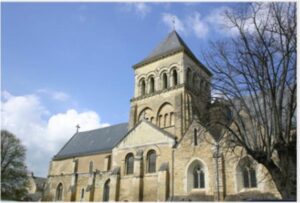
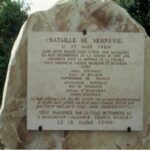
17th August 1424: Battle of Verneuil sur Avre during the Hundred Years War. French and Scottish forces were defeated by the English with losses of around 9,000 and John Stewart, Earl of Buchan and Sir Archibald Douglas were killed along with many French nobles. In France this is considered by some as important as Agincourt.
Les Valois directsMultimap.com Verneuil sur Avre
17th August 1746:
Arthur Elphinstone, Lord Balmerino, was beheaded at Tower Hill for his part in the ’45 Rising. On the scaffold he said “I am afraid there are some who may think my behaviour bold;” and, speaking to a gentleman near him, added, “Remember, sir, what I tell you; it arises from a confidence in God, and a clear conscience.”.
18th August 1846: Elsie Inglis, Scottish Suffragette, born
22nd August 1138: The Battle of the Standard was fought near Northallerton, Yorkshire. The battle was fought as part of David I’s support for
Matilda, a claimant of the English throne.
23rd August 1305: The execution of Sir William Wallace, hanged, drawn and quartered at Smithfield, London. The site is marked by a memorial on
the wall of St Bartholomew’s Hospital, West Smithfield.
24th August 1482: Berwick-upon-Tweed was officially declared part of England after changing hands on numerous occasions in the past. It received special mention in government documents along with England and Scotland. In 1856 Britain signed a peace treaty with Russia after the Crimean War but Berwick-on-Tweed was omitted. The town was technically at war with Russia for the next 113 years until peace was declared in 1966.
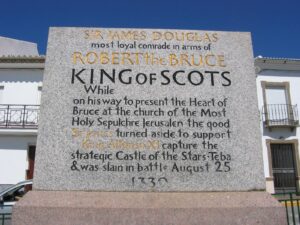
25th August 1330: Battle of Teba This is the origin of the real “Braveheart” story. When Robert the Bruce died in 1329 his heart was removed and embalmed. According to many accounts, starting with 14th Century John Barbour’s “The Bruce”, and including that of the Lockhart family, whose name derives from the subsequent adventure, as The Bruce requested, his heart was to be taken to Jerusalem by Sir James Douglas, known as “The Black Douglas” , accompanied by Sir William St Clair of Roslin, Sir Robert and Sir Walter Logan, Sir William Keith, Sir Alan Cathcart and Sir Symon Loccard of Lee, and one other knight unnamed.
A monument in Teba reads “Sir James Douglas most loyal comrade in arms of Robert the Bruce King of Scots while on his way to present the Heart of Bruce at the church of the Most Holy Sepulchre Jerusalem the good Sir James turned aside to support King Alfonso XI capture the strategic Castle of the Stars Teba & was slain in battle August 25 1330“
25th August 1819: James Watt, developer of the steam engine, died.“
25th August 1930: The actor, Sir Sean Connery, was born in the Fountainbridge area of Edinburgh.
26th August 1875: John Buchan, novelist and statesman who served as Governor General of Canada born.
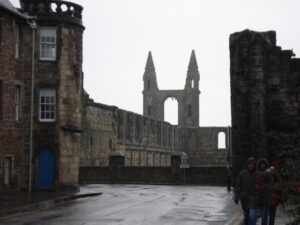
27th August 1472: Pope Sixtus IV’s Bull erected the See of St. Andrews into an archbishopric, and its cathedral into the metropolitan church for the whole of Scotland.
27th August 1748: James Thomson, Poet and author of “Rule Britannia” died.
27th August 1784: James Tytler made the first hot air balloon flight in Britain, ascending some 300 feet from Comely Garden and landing in Restalrig Road.
28th August 1296: Edward I of England held a “parliament” at Berwick and required all prominent Scots to swear allegiance to him. Their names were recorded in the “Ragman Roll”, so called, it is believed, from the tangle of seals attached thereto. (There was an earlier “Ragman Roll” in 1291.)
28th August 1640: The Battle of Newburn on Tyne. An experienced Scots Army under Alexander Leslie, the Earl of Leven defeated a smaller and less experienced English force, during the Second Bishops’ War, as a result of Charles I’s attempt to impose the Anglican Prayer Book in Scotland.







#/media/File:James_Currie_b1756.jpg "August")