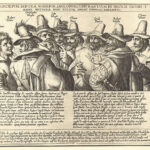
5th November 1605: Plot to assassinate James VI of Scotland and I of England by blowing up the Houses of Parliament foiled.
“Remember, remember the 5th of November, gunpowder treason and plot. I see no reason why gunpowder treason should ever be forgot.”
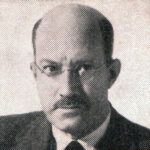
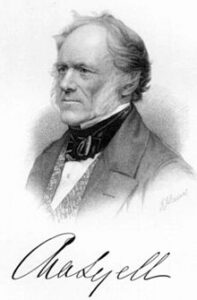
5th November 1879: James Clerk Maxwell, the ground-breaking physicist, died.
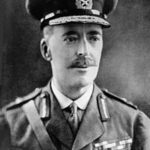
6th November 1869: Sir William Leishman born in Glasgow. He became professor of pathology in the Army Medical College, and director-general of the Army Medical Service (1923). He discovered an effective vaccine for inoculation against typhoid, and was the first to discover the parasite that causes the disease Leishmaniasis, which is named after him.
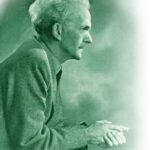
7th November 1974: Eric Linklater died. Born in Wales, he always considered himself an Orcadian. Perhaps his greatest work is “Magnus Merriman”, a political satire based on his own unsuccessful campaign as a candidate for the National Party of Scotland.
8th November 1891: Neil Gunn, author of “The Silver Darlings”, and other works on Caithness, born.
9th November 1937: Ramsay MacDonald died crossing the Atlantic on holiday on the liner “REINA DEL PACIFICO”.
10th November 1871: Henry Morton Stanley found the missing Scottish missionary David Livingstone.
11th November 1918: Armistice Day, marking the end of hostilities in World War I. The guns were silenced, finally , on the 11th hour of the 11th day of the 11th month. Scotland accounted for 10% of the United Kingdom’s population, but 147,609 Scots were killed during the war, a fifth of the UK’s War Dead.
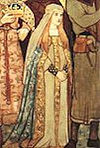
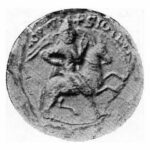
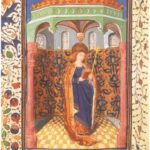
13th November 1093: Malcolm III (Canmore) was killed at the Battle of Alnwick, aged about 62. His wife, Margaret, died on receiving the news of his death, and was made a saint in 1249.
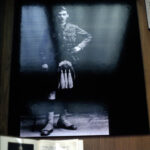
15th November 1746: James Reid from Angus was hanged, drawn, and quartered at York. He had served as a piper in the 1st Battalion, Lord Ogilvy’s (Forfarshire) Regiment, raised in October 1745 in support of the Young Pretender, Prince Charles Edward Stewart. He was among several men from this regiment left as part of the garrison of the English border city of Carlisle when the Jacobites abandoned their invasion of England, and was captured when the city surrendered to government forces in December 1745. At his treason trial it was put forward in his defence that, as a musician, he did not carry arms and had not struck a blow against the Government. However the court ruled that “...a Highland regiment never marched without a piper, and therefore his bagpipe, in the eyes of the law, was an instrument of war“.
16th November 1093: Queen Margaret, wife of Malcolm III died at Edinburgh Castle on receiving the news of his death at the Battle of Alnwick. She was made a saint in 1249. St Margaret’s Chapel is in Edinburgh Castle.
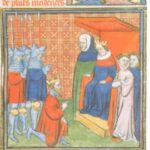
17th November 1292: John Balliol was awarded the Scottish Crown. He swore fealty to Edward I and on 26 December paid homage to him at Newcastle-upon-Tyne for the Kingdom of Scotland. When it became clear Edward I regarded Scotland as a vassal state, the Scots Nobles resisted and with Balliol agreed the “Auld Alliance” with France. On 5 April 1296 he renounced his fealty to Edward I, who marched north and defeated the Scots at the Battle of Dunbar. Balliol surrendered to Edward I on 10 July and his nickname “Toom Tabard” came from the removal of heraldic insignia from his coat to mark his submission. He was released in 1299 and retired to his French estate at Bailleul where he died in 1313.
18th November 1785: Sir David Wilkie, the Scottish painter, was born.
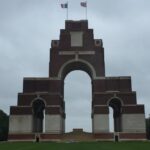
18th November 1916: The last day of The Battle of the Somme. The Thiepval Memorial to the Missing of the Somme, bears the names of more than 72,000 officers and men of the United Kingdom and South African forces who died in the Somme sector before 20th March 1918 and have no known grave. Over 90% of those commemorated there died between July and November 1916.
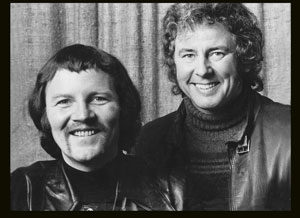
18th November 1998: Robin Hall, of the musical partnership Robin Hall and Jimmy MacGregor, interpreters of The Mingulay Boat Song and ineffable “Ye cannae shove yer Grannie aff the Bus”, died.
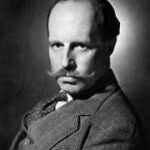
19th November 1976: Sir Basil Spence died. Born in Bombay, he was educated in Edinburgh where he spent much of his working life. Among his work is Coventry Cathedral, and in Edinburgh the Main University Library.
20th November 1776: William Blackwood, publisher, born in Edinburgh.
21st November : Lt E A Mackintosh, Seaforth Highlanders, author of poem Cha Till Maccruimein, which foretold his own death, killed on the second day of the Battle of Cambrai.
22nd November 1515: Mary of Guise born. She was the second French consort of James V, a devout Catholic, and aimed for union between Scotland and France. She brought a French Army to Scotland, but despite her efforts, the Scottish Protestant Reformation began, and the French were driven out of Scotland.
23rd November 1834: James Thomson, BV, born in Port of Glasgow. He wrote under the name “Bysshe Vanolis” to distinguish himself from James Thomson 1700-1748, author of “Rule Britannia”. He died in 1882.
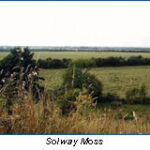
24th November 1542: The Battle of Solway Moss. The Scots under the command of James V‘s favourite, Lord Oliver Sinclair and Lord Maxwell, were routed by a smaller English force.
26th November 1836: John Loudon MacAdam who introduced the “macadam” or “tarmac” system of road surfacing, died at Moffat, Dumfrieshire.
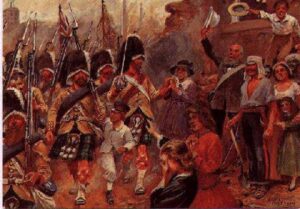
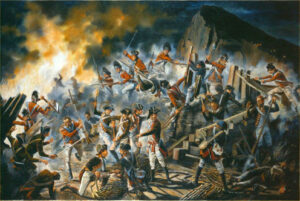
27th November 1789: The 72nd Regiment of Foot (Seaforth) took part in the Great Sortie from Gibraltar, doing such damage to the Spanish siege works that their plans to assault were abandoned.
Prints are obtainable from the artist, David Rowlands www.davidrowlands.co.uk
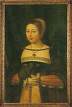
28th November 1489: Margaret Tudor, daughter of Henry VII and future wife of James IV, born.
(According to some sources 28th November).
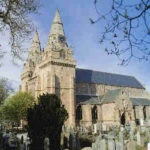
30th November: St Andrew’s Day. St Andrew is the Patron Saint of Scotland.
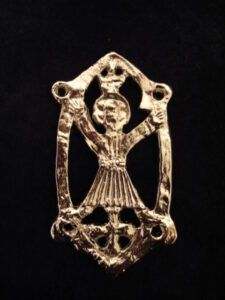
The Pilgrim Badge was on sale in St Andrews Museum in 2007 and was a replica of an incomplete lead badge that was on display in the Museum. The replica was made by the late Peter Shorer. It is now available from Historic Jewellery Reproduction.
St Andrew's Mediaeval Pilgrim Badge
30th November 1335: The Battle of Culblean, which was the turning point in the Second War of Independence.