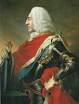
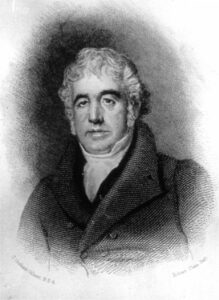
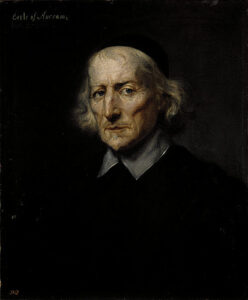
10th December 1747: Duncan Forbes of Culloden died. Scots statesman, and loyal to the Government, he persuaded many not to join the Jacobite cause in 1745 and also sought mercy for the Jacobites after their defeat.
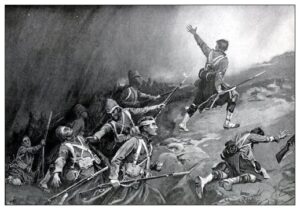
11th December 1889: The Highland Brigade under Maj Gen Wauchope took part in the Battle of Magersfontein in the South African War. The Brigade included 1st Bn The Highland Light Infantry (now 2 SCOTS) 2nd Bn The Black Watch (now 3 SCOTS), 1st Gordon Highlanders and 2nd Bn The Seaforth Highlanders (now 4 SCOTS),and 1st Bn The Argyll and Sutherland Highlanders (now 5 SCOTS). The Brigade advanced to within 400 yards of the Boer positions when they hit a trip wire. The Boers opened fire, General Wauchope was killed and the Brigade held up by wire and rifle fire, taking heavy casualties, and ultimately withdrew. The action is remembered in the pipe tune “The Highland Brigade at Magersfontein”.
11th December 1936: Edward VIII‘s instrument of abdication took effect.
17th December 1907: William Thomson, Lord Kelvin died. He was outstanding in theory as well as practice. His nephew died at sea and caused him to work for safety at sea; his compass was adopted worldwide; his tide gauge was in use for many years. He provided solutions for the laying of the first transatlantic telegraph cables. A system of temperature and make of refrigerator are named after him.
18th December 1661: The “ELIZABETH” of Burntisland sank off the English Coast, returning Scottish Records to Scotland, which had been removed to the Tower of London by Cromwell in 1651.
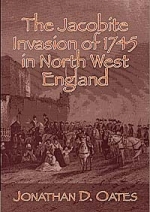
18th December 1745: Skirmish at Clifton Moor, near Clifton, the last action on English soil, between Lord George Murray, commanding the rearguard of the Jacobite forces and the Duke of Cumberland’s advancing army left 6 Jacobites and 10 Government soldiers dead. Ref: 1745 A Military History of the Last Jacobite Rising by Stuart Reid ISBN 1-86227-130-5
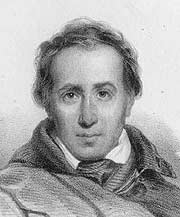
21st December 1805: Thomas Graham, Chemist, born in Glasgow.
22nd December 1715: James Francis Edward Stuart “The Old Pretender”, landed at Peterhead, Aberdeenshire, but by 10 February 1716 the Jacobite Rising of 1715 was over, and he returned to France.
22nd December 1820: Convicted “radicals” of the Radical Revolt of 1820 deported to New South Wales on the vessel “SPEKE”.
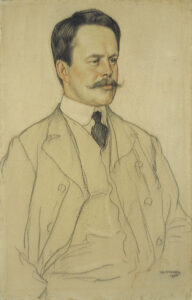
22nd December 1930: Neil Munro, novelist and poet, perhaps best known for his “Para Handy” stories, died at his home, “Cromalt” in Craigendoran, Helensburgh.
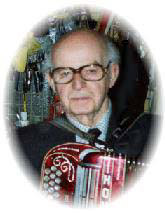
23rd December 2000: Jimmy Shand, musician and band leader, died.
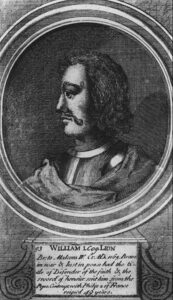
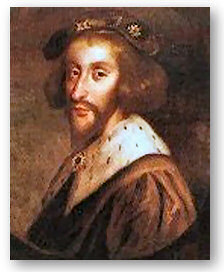
25th December 1251: Alexander III knighted by Henry III of England. Born in 1241, he had become King on his father Alexander II‘s death in 1249, at the age of 7.
26th December 1251: Alexander III married to Henry III of England’s eldest daughter, Margaret. He was 10 years old.
26th December 1647: Charles I while imprisoned in Carisbrooke Castle on the Isle of Wight enters the Engagement with the Scots. A Scots Army was to invaded England in support of the King in exchanged for the establishment of Presbyterianism in England.
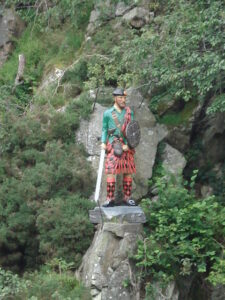
"Rob Roy Statue, The Mannie on the Rock, Peterculter"
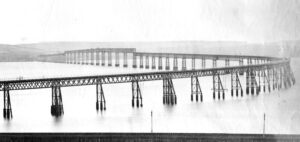
28th December 1879: The Tay Bridge Disaster. During a violent storm at night the bridge, which had only been opened just over 2 years before collapsed and a train went into the Tay, with the loss of over 70 people. There were no survivors. This disaster is remembered in William McGonagall’s poem.











#/media/File:Thomas_Graham.jpg "December")