Hogmanay
New Year's Eve, 31st December
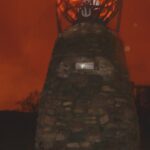
Hogmanay is the name for the New Year’s Eve Festival in Scotland, and has a stronger tradition attached to it than in any other part of these Isles. The origins of Hogmanay are probably Norse, as a pagan fire festival, as evidenced by the continuing traditions of the Fireball Ceremony in Stonehaven, and Up-Helly-Aa in Shetland, and its name is most likely from the Norman French “hoguinané” which survives on Guernsey as “hoginono”. This in turn may have derived from the old French “aguillanneuf”, meaning the “eve of the new year”, though there are other versions, including the Norse “hoggo-nott“, the feast before “jul” (yule), which became Christmas, or Flemish brought in by the immigrant weavers from the Low Countries “hoog min dag”, “great love day”, or from Anglo-Saxon, “haleg monath”, “holy Month”, or old Gaelic, “oge maidne”, “new morning”. It has even been suggested that it comes from the French “homme est né”, “Man is born”.
The reason for the importance of Hogmanay to the Scots is that for many years after the Reformation, Christmas was set aside by the General Assembly from 1638, as a Roman Catholic indulgence. The same happened in England and Wales, for a shorter period, during the interregnum of Oliver Cromwell, but in Scotland, the power of the Presbyterian Church was such that Christmas was not celebrated to any extent for close to 400 years, only developing with the prosperity that returned following WWII. Hogmanay’s significance is still marked by the 2nd of January still being a public holiday in Scotland.
First Footing
There are many customs associated with Hogmanay throughout Scotland, but the most consistent one is First Footing. It is considered fortunate if your first visitor on the 1st January is a tall dark stranger, armed with a lump of coal and a bottle of whisky. To this can be added the options of salt, shortbread and/or a black bun. That he should be dark is said to hark back to when a blond arrival might be a Viking, not always with the best of intentions towards home and family.
It is incomplete without at least a partial rendition of the Immortal Bard Burns’ “Auld Lang Syne”:
Should auld acquaintance be forgot,
And never brought to mind?
Should auld acquaintance be forgot,
And auld lang syne!
Chorus:
For auld lang syne, my dear,
For auld lang syne.
We’ll tak a cup o’ kindness yet,
For auld lang syne.
And surely ye’ll be your pint stowp!
And surely I’ll be mine!
And we’ll tak a cup o’kindness yet,
For auld lang syne.
Chorus
We twa hae run about the braes,
And pou’d the gowans fine;
But we’ve wander’d mony a weary fit,
Sin’ auld lang syne.
Chorus
We twa hae paidl’d in the burn,
Frae morning sun till dine;
But seas between us braid hae roar’d
Sin’ auld lang syne.
Chorus
And there’s a hand, my trusty fere!
And gie’s a hand o’ thine!
And we’ll tak a right gude-willie waught,
For auld lang syne.
Chorus