Skip to content

Events in Scottish History

September

1st September 714: St Giles, patron saint of Edinburgh and Elgin, died.
St Giles Feast Day. Edinburgh’s Cathedral is St Giles.

Source: The Scottish Invention of America, Democracy and Human Rights, Klieforth and Munro, 2004, ISBN 0-7618-2791

st giles cathedral

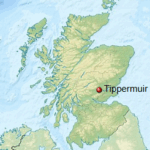
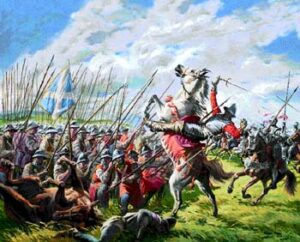
1st September 1644: The Battle of Tippermuir.  Montrose victory over the Covenanters.

tippermuir

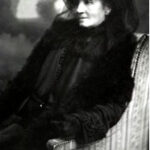
1st September 1863: Violet Augusta Mary Frederica Kennedy-Erskine later the Angus poet Violet Jacob, author of “The Wild Geese”, born.

violet jacob
1st September 1880:  The relief of Kandahar after a march of over 300 miles from Kabul, at the end of the 2nd Afghan War, by General Roberts included the 72nd Highlanders and 92nd Highlanders.
2nd September 1978: Hugh MacDiarmid (Christopher Murray Grieve) died.
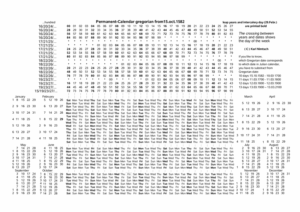
3rd September 1752:  The Gregorian Calendar replaced the Julian Calendar, and 3 September  became 14 September.
800px permanent calendar

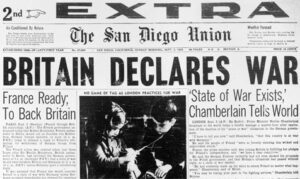
3rd September 1939:  Britain and France declare war on Germany.  Neville Chamberlain announces to the British people: “This morning the British Ambassador in Berlin handed the German government a final note, stating that unless we heard from them – by 11 o’clock – that they were prepared at once to withdraw their troops from Poland, a state of war would exist between us; I have to tell you now that no such undertaking has been received and that, consequently, this country is at war with Germany.”
Audio Clip

britain declares war
4th September 1241: Alexander III  born at Roxburgh.
4th September 1571: Matthew Stuart 4th Earl of Lennox, Regent of Scotland shot dead in a raid at Stirling Castle.

5th September 1750: Robert Ferguson, Scots writer born in Edinburgh.
Robert Ferguson on Jeff Nisbet’s Edinburgh –  Facebook Page

5th September 1808:  John Home, Scots writer, minister and historian, died at Merchiston Bank, near Edinburgh.

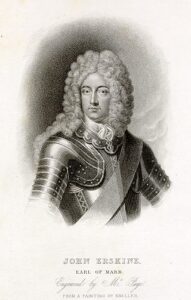
6th September 1715:  John Erskine, the 6th Earl of Mar,”Bobbing John”, raised the Standard for James Francis Edward Stuart, the “Old Pretender” at the Braes o’ Mar, at the start of the 1715 Rising.
Braemar, Scotland : History & Folklore

6th September 1876: John James Richard Macleod, discoverer of insulin, born near Dunkeld.

6th September 1914: The start of the Battle of The Marne which halted the German advance into France. While this is seen as a French victory, the BEF (British Expeditionary Force) under General French played a prominent part. 

7th September 1306: Sir Simon Fraser (The Patriot), captured at St John’s Town was hanged, drawn and quartered in London and his head was displayed on London Bridge alongside William Wallace’s.
Sir Herbert Morham and Thomas Le Boys were beheaded at the Tower for supporting the Scots’ Cause.  Sir Christopher Seton,  a Yorkshire knight married to Bruce’s sister Christian, also captured at St John’s Town was hanged, cut down and beheaded.

7th September 1736: Captain John Porteous was seized by a mob from the Edinburgh Tolbooth and hanged from a dyer’s pole in the Grassmarket for his alleged role in firing on a crowd earlier that year.

7th September 1775: John Leyden, poet and orientalist, was born at Denholm.

8th September 1468: Christian I of Denmark, Sweden and Norway contracted the marriage of his only daughter Margaret Oldenburg, Princess of Denmark to James III (after discharging the Annual of Norway for Man and the Hebrides) with a dowry of 60,000 florins, 10,000 florins to be paid before her departure, and Orkney being pledged for 50,000 florins.  References: International Law in Historical Perspective, J. H. W. Verzijl p 391 Publication of the Stair Society p. 448 SCAN Catalogue – person record The Annexation of the earldom of Orkney and lordship of Shetland to the Crown, 20th February 1472

8th September 1650: Princess Elizabeth, daughter of Charles I, died of neglect at Carisbrooke Castle on the Isle of Wight and was buried at Newport Parish  Church, Sts Thomas.

9th September 1513: James IV and the Flower of Scotland fell in battle at Flodden Field, near Branxton, Northumberland, to the billhooks of the Earl of Surrey’s English Army.  James IV had invaded England as a consequence of the “Auld Alliance” in response to Henry VIII‘s invasion of France.

9th September 1758: Alexander Nasmyth, Scots painter, born in Edinburgh.

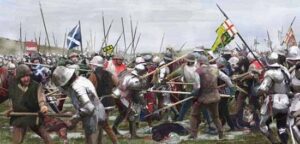
10th September 1547:  The Battle of Pinkie, between Musselburgh and Wallyford on the Esk, part of an English attempt to force a union of the kingdoms by attempting to marry Mary Queen of Scots to Prince Edward (later Edward VI) saw the  Scots lead by the Earl of Arran defeated by an English Army led by the Duke of Somerset. Over half the Scots Army was killed or wounded, but the English plan failed as they were prevented from reaching Edinburgh, and their attack precipitated Mary’s marriage to the Dauphin of France..
pinkie
10th September 1621: Sir William Alexander, later 1st Earl of Stirling and later 1st Viscount of Canada, was granted Nova Scotia by a Royal Charter from James VI. The charter came with a title of  Baronet of Nova Scotia. He later created the Knights Baronets of Nova Scotia.

10th September 1763: James Thomson born.  He wrote chiefly in the local vernacular describing Currie.  He died in 1832.

10th September 1847: The Caledonian Railway opened its line from Carlisle to Beattock.
11th September 1297: The Battle of Stirling Bridge.  The Scots Army led Andrew Moray and William Wallace defeated  and destroy half the English  Army, led by Hugh de Cressingham, drawing them onto boggy ground, across the bridge, and cutting them off from the rest of the English Army, led by John de Warenne, Earl of Surrey.

12th September 1848: William McNab, the curator of the Royal Botanic Garden Edinburgh, who moved the garden to its  current location at Inverleith Row, died.

Source: The Scottish Invention of America, Democracy and Human Rights By Alexander Leslie Klieforth, Robert John Munro ISBN-10: 0761827919

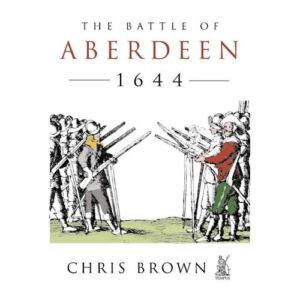
13th September 1644: The Battle of Aberdeen. The Marquis of Montrose captures the city from the Covenanters led by Lord Burleigh.

14th September 1402:  The Battle of Humbleton or Homildon Hill.  The Earl of Douglas is defeated by Henry Percy (Hotspur) in Northumberland.
14th September 1580: Robert Gordon of Straloch, eminent geographer and antiquary, born at Kinnundy, Aberdeenshire. He was the first graduate of Marischal University,  which had been founded recently by George, the Earl Marischal. Marischal Virtual Museum – The University of Aberdeen
15th September 1595: The Edinburgh Royal High School riot Bailie John MacMorran, the wealthy magistrate, was shot and killed by one of the pupils, William Sinclair, described as son of the “Chancellor” of Caithness. Roland Saint-Clair’s St Clairs of the Isles states this was the later Sir William Sinclair Knight of Mey, usually styled Sir William of Cadboll.ity of Aberdeen
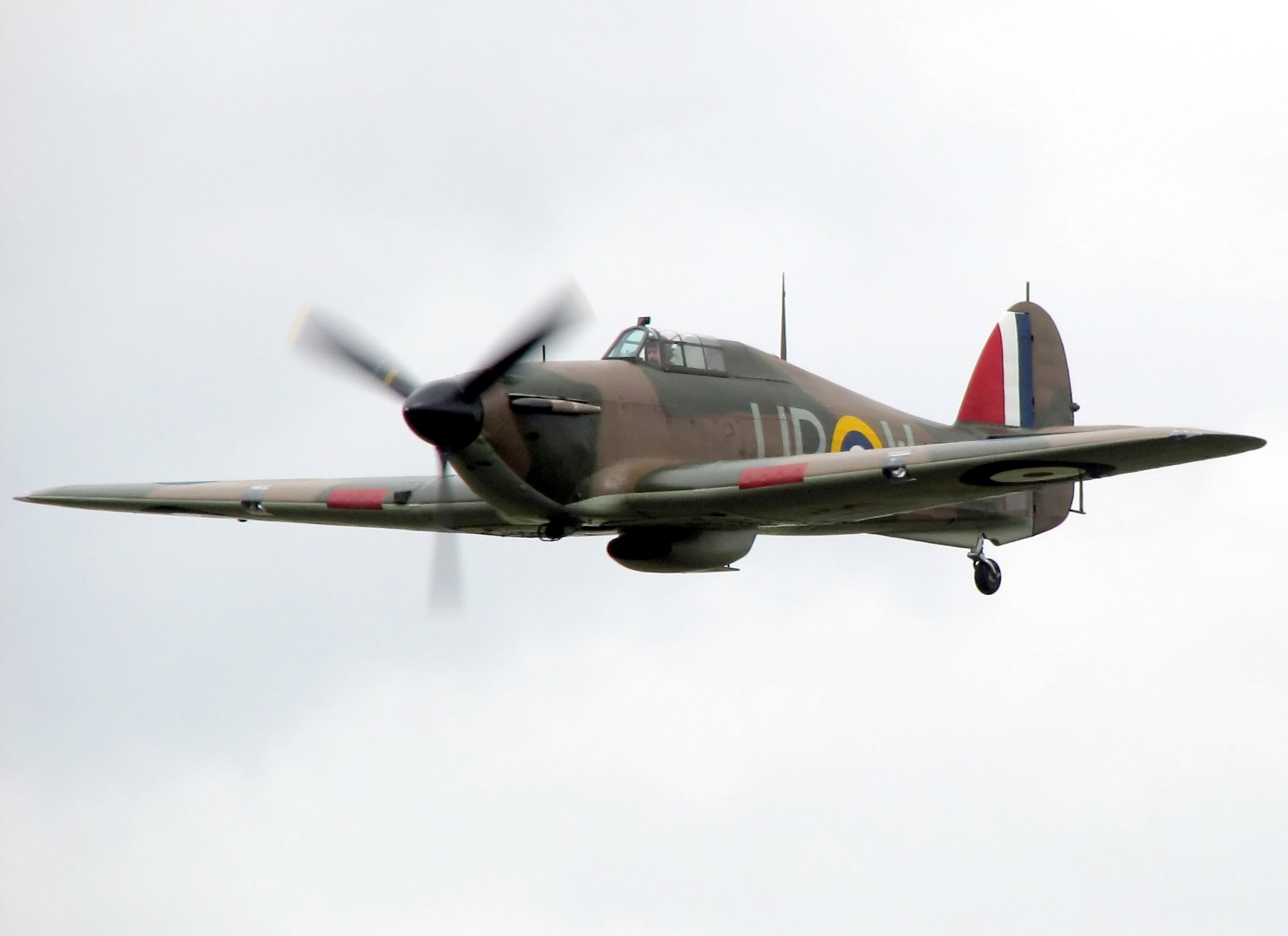
15th September 1940:  Battle of Britain Day marking the day when the most decisive air battles were fought.   “Never, in the field of conflict was so much owed by so many to so few.” Winston Churchill, 1940. Scots Historian, Les Taylor, has claimed that the Battle of Britain began in the skies over Orkney, rather then over the White Cliffs of Dover.
16th September 1745: Jacobite forces rout Colonel Gardiner’s 13th Dragoons at “The Canter of Coltbrig” outside Edinburgh.
17th September 1420: The town of Melun in France surrenders to the siege of England’s Henry V and his Burgundian allies.  Twenty Scots among the defenders were hanged as they had defied captive James I‘s orders to surrender.
17th September 1470: The first transaction in a series up to 16th May 1471 by which the Crown in exchange of certain lands in Fife and a pension of 40 merks acquired from Earl William Sinclair an irredeemable title to the earldom of Orkney.  The earldom of Orkney was then annexed by the Crown on 20th February 1472. References: Oppressions of the sixteenth century in the islands of Orkney and Zetland, edited by David Balfour. p. xxxv and xxxvi William Elphinstone and the kingdom of Scotland, 1431-1514: the struggle for order, Leslie John Macfarlane p. 156 The Case for Udal Law. William Sinclair, 1st Earl of Caithness 3rd Earl of Orkney (1410 – 1482) – Genealogy The Annexation of the earldom of Orkney and lordship of Shetland to the Crown, 20th February 1472
17th September 1869: John Elder, engineer and shipbuilder, died.

18th September 1643: Gilbert Burnet, Bishop of Salisbury and Historian, born in Edinburgh.

18th September 1959: Auchengeich Colliery disaster. 47 men lost their lives in a fire.
19th September 1778: Henry, Lord Brougham, 1st Baron Brougham and Vaux born in Edinburgh. 

19th September 1806: William Dyce, artist, born in Aberdeen. Aberdeen‘s Dyce Airport is named after him. 

20th September 1842: Sir James Dewar, inventor of the process of liquifaction of gases, born.

20th September 1967: The “RMS QUEEN ELIZABETH 2”, “QE2” was launched by HM The Queen at John Brown and Co’s yard, Clydebank.

21st September 1722: John Home, Scots writer, minister and historian, born at Leith.
21st September 1745: The Jacobite Army defeats General Sir John Cope’s Government Army at Prestonpans near Edinburgh.

21st September 1756: John Loudon MacAdam who introduced the “macadam” or “tarmac” system of road surfacing, was born in Ayr.

21st September 1832: Sir Walter Scott died.

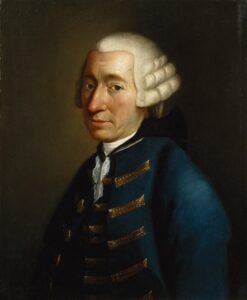
22nd September 1834 : Thomas Telford, the civil engineer died.

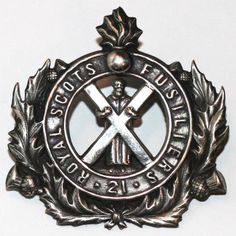
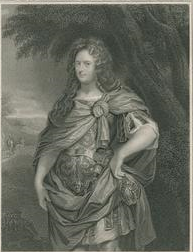
23rd September 1678 :  The Royal Scots Fusiliers raised by the Earl of Mar as “The Earl of Mar’s Regiment”. In 1959 they were merged with the The Highland Light Infantry (City of Glasgow Regiment) to form The Royal Highland Fusiliers (Princess Margaret’s Own Glasgow and Ayrshire Regiment).  In 2006 all the old Scottish Regiments were merged into a new Regiment, the Royal Regiment of Scotland.
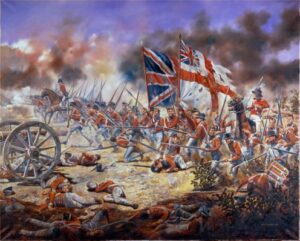
23rd September 1803 : The Battle of Assaye. All but one of the officers of the 74th Regiment of Foot, The Highland Light Infantry, were killed or wounded in General Arthur Wellesley’s (later the Duke of Wellington) greatest victory in India. Prints are obtainable from the artist, David Rowlands www.davidrowlands.co.uk

24th September 1332 : Edward Balliol, son of John Balliol, crowned at Scone.  He was regarded by many as the legitimate successor, but was chased out of Scotland and sought refuge in England.

25th September 1703 : Archibald Campbell, 10th Earl and 1st Duke of Argyll, Marquess of Kintyre and Lorne, Earl of Campbell And Cowall, Viscount of Lochow and Glenyla, Lord of Inverary, Mull, Morvern, and Tirie and one of the commissioners who invited William of Orange to Britain and responsible for the massacre of Glencoe, died.
25th September 1915 : The first day of the Battle of Loos.  All ten Scottish Regiments were involved in this battle as part of the 9th and 15th Divisions. The battle  lasted until 18th October. 36 Battalions took part and sustained over 12,000 casualties, one fifth of the total.
26th September 1290 : Margaret “Maid of Norway”, Eiriksdottir, died in Orkney. When her grandfather had died Princess Margaret was three years old. The Scottish Parliament appointed six Guardians to rule on her behalf, and on 18th July 1290 the Scots agreed in the Treaty of Birgham (Berwickshire) that she should marry Edward I of England’s eldest son, Prince Edward. At the end of September, the eight-year-old Queen set sail for Scotland, escorted by Bishop Narve of Bergen. She was taken ill on the voyage and her ship put in at Orkney, but she died there, in the arms of the Bishop. She was buried at the Kristkirken, Bergen. Her death left the Scottish succession open, and gave Edward I the opportunity to start his attacks on Scotland.
27th September 1938 : RMS Queen Elizabeth was built by John Brown & Company shipyard at Clydebank, Scotland, was launched.
28th September 1582 :   George Buchanan, poet humanist and tutor to James VI, died.
28th September 1864 :  Charles Murray, North East poet, born in Alford, Aberdeenshire. Poets’ Corner – Charles Murray – Selected Works
29th September 1902 : William McGonagall, born in 1825, died in Edinburgh.
30th September 1813 : John Rae, surgeon, trader and Canadian explorer, was born at Clestrain, Orphir, Orkney. He died in London, in 1893 and is buried in St Magnus Cathedral, Kirkwall, Orkney.