Skip to content

Events this week in Scottish History

13th June 1814:  The Strathnaver Clearances began on the Sutherland estates. Families were given half an hour to remove their belongings before their cottages were set on fire.
13th/14th June 1982:  The Scots Guards, assaulted and captured Mount Tumbledown in a night attack in the Falklands War, with the loss of eight lives and forty one wounded. They were opposed by the Argentine 5th Marine Infantry Battalion who lost thirty lives.
14th June 1946:  John Logie Baird, inventor of the first television, died.
15th June 1844:  Thomas Campbell, poet, died.
15th June 1996:  Soldier and author, Sir Fitzroy Maclean, died.
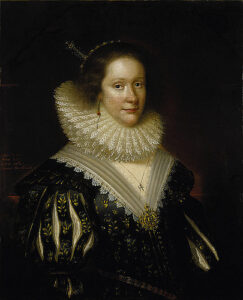
16th June 1338:  Siege of Dunbar Castle, defended for 5 months by Black Agnes, countess of Dunbar against the English was raised by Alexander Ramsay, who with 40 men  slipped through through the English lines with supplies.
16th June 1807:  The Rev. John Skinner, author  of  “Tullochgorum”,  described by Robert Burns  as “the best Scotch song ever Scotland saw”, died.
16th June 1971:  Lord Reith died. Born in Stonehaven in 1889, son of a Church of Scotland Minister.  He was General Manager/Managing Director of the BBC from 1922 to 1927 and set the non commercial model for the corporation that has continued to this day. The Reith Lectures are held in his Memory. Hear Lord Reith.
17th June 1390:  Alexander Stewart, the Wolf of Badenoch, burned Elgin Cathedral.
17th June 1567:  Mary, Queen of Scots, was imprisoned in Loch Leven Castle, on the island in the middle of the loch after the her defeat  at the battle of Carberry Hill.  In the spring of the following year before Mary made her escape from the castle, dressed as a servant girl.
mary queen of scots y
17th June 1823:  patented the waterproof cloth he was using to make raincoats.
18th June 1639:  Pacification of Berwick.  Charles I’s Army reaches Berwick-upon-Tweed, but being met by a larger Scottish Army, agrees a truce.

18th June 1815:  The Battle of Waterloo was fought in Belgium. Many Scottish regiments took part in the battle, which ended Napoleon’s “hundred days”. Perhaps the most prominent action involving the Scottish contingent was that of The Gordon Highlanders and the Scots Greys. A French column with over 4,000 men advanced on the Highlanders, while the Gordons, with only about 300 men, were under strict orders not to give way. As the situation reached its most critical moment, suddenly the Scots Greys appeared on the top of the hill.  It is improbable that it happened  but the tradition of The Gordons is that they and Scots Greys charged the French column, crying “Scotland Forever”, the Gordons hanging on to the stirrups of the cavalry horses.

19th June 1566:  J ames VI was born to Mary, Queen of Scots, and Lord Darnley.  He acceded to the throne at the age of one, after his mother was forced to abdicate. Taught by protestant, George Buchanan, he became known as the “wisest fool in Christendom”, an  ironic tribute to his sharp wit by Henri IV of France.  He is known for the King James Authorised Version of the Bible, published in 1611.  He  gaining the English throne in 1603  and  only returned once to Scotland, in 1617.
james vi & i
19th June 1606:  James Hamilton, 1st Duke of Hamilton born. 
19th June 1861:  Earl Haig was born in Edinburgh. He rose through the ranks of the 7th Hussars and became Commander in Chief of British Forces in 1915. His use of the Army in the  First World War has been called wasteful of lives, and his own grief at the casualties was given by him as the impetus for founding the Royal British Legion and initiation of the Poppy Day Appeal.

19th June 1937:  JM Barrie, the Scottish playwright and novelist, died. Mainly remembered today for “Peter Pan” his works include “A Window in Thrums” and the “The Admirable Crichton”.

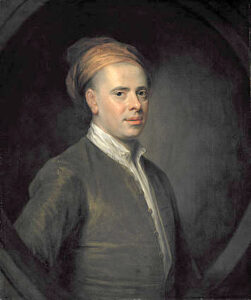
20th June 1723:  Adam Ferguson, philosopher and historian, born at Logierait, Perthshire.
profadamferguson
21st June 1813:  W E Aytoun, lawyer and poet, author of “The Heart of the Bruce”, sherriff of “Orkney and Zetland” born.