Skip to content

Events in Scottish History

February

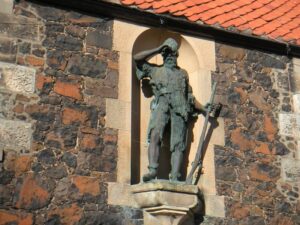
1st February 1709:  Alexander Selkirk, from Lower Largo in Fife, and the inspiration of “Robinson Crusoe”, rescued from Isla Más a Tierra (today known as Robinson Crusoe Island), in the Juan Fernández Islands, over 400 miles off the West Coast of Chile.

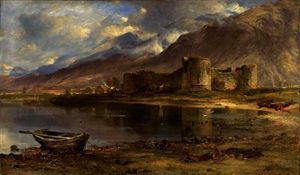
2nd February 1645:  Battle of Inverlochy.  The Marquis of Montrose defeated the Covenanters.
300px inverlochycastle

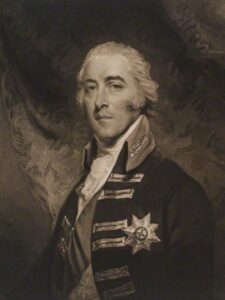
3rd February 1828:  Admiral Sir Richard Strachan RN, KB (Bart.) died.

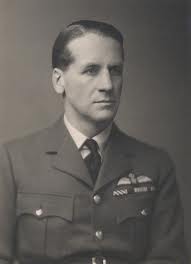
3rd February 1903:  Douglas Douglas-Hamilton, 14th Duke of Hamilton, born.  He served in the Royal Air Force and was Member of Parliament for East Renfrewshire 1930-1940.
4th February 1716:  James Francis Edward Stuart, the Old Pretender, left Montrose, at the end of  the ’15 Jacobite Rising.
james the old pretender

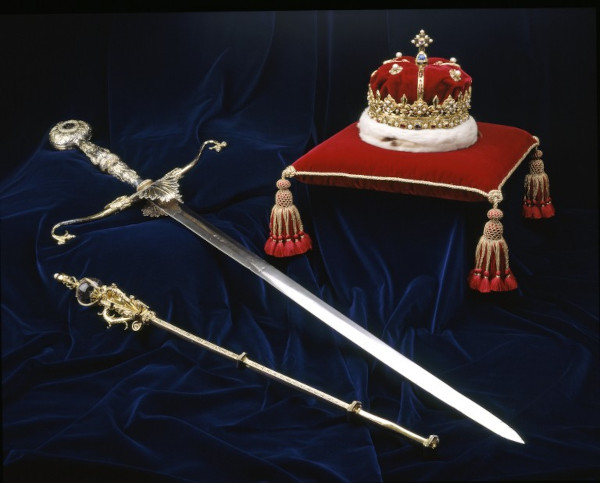
4th February 1818:  The Honours of Scotland, laid up in Edinburgh  on order in 1707 on the Union of Parliaments, were rediscovered by Walter Scott.  They went on display in the Castle in 1819. 

5th February 1649:  Charles II proclaimed King in Edinburgh following the execution of his father, Charles I.
charles ii
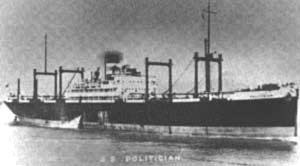
5th February 1941:  ran aground of the North Shore of the Island of Eriskay.  The event and subsequent developments is remembered in the film “Whisky Galore”. See also: Whisky Galore and the SS Politican
politician
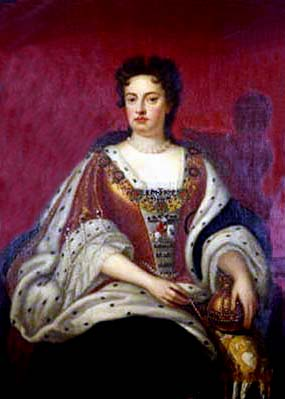
6th February 1665:  The future Queen Anne born.
queen anne
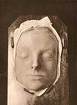
6th February 1685:  Charles II died.
charles ii
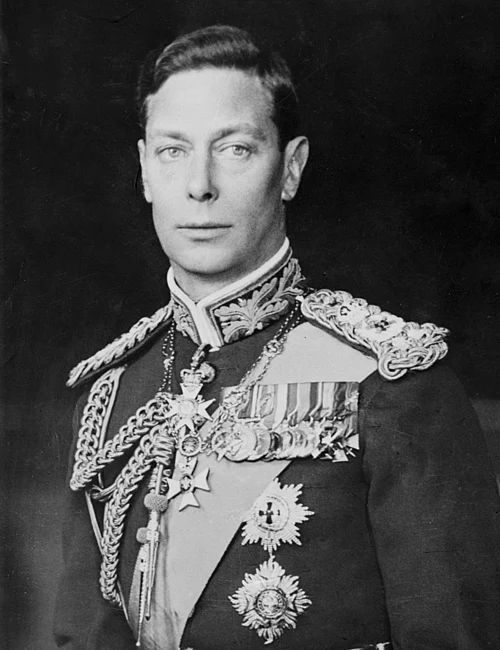
6th February 1952:  George VI died at Sandringham, aged 56. Queen Elizabeth accedes to the Throne. 2012 marks the Diamond Jubilee of her Reign. Churchill’s tribute to George VI.
7th February 1837:  James Murray, first editor of the Oxford English Dictionary, born in Denholm Scotland.
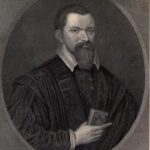
8th February 1599:  Robert Rollock, Principal of The University of Edinburgh, died. He was born in 1555.
robert rollock 2 cropped
8th February 1928:  John Logie Baird demonstrated television transmitting from London to New York.
olympus digital camera
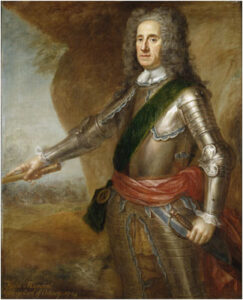
9th February 1666:  George Hamilton, 1st Earl of Orkney (Third Creation) , soldier,  baptised. He served in the 1st Regiment of Foot (The Royal Scots).
1stearloforkney
9th February 1773:  Dr. John Gregory, author of “A Father’s Legacy to his Daughters“, died in Edinburgh.
10th February 1567:  Henry Stuart, Lord Darnley, died. A massive explosion destroyed Kirk o’ Fields house, where he was staying, but his body and that of his valet were found in an orchard nearby, strangled.
11th February 1649:  William Carstares. Minister, born at Cathcart.
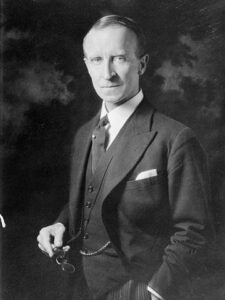
11th February 1940:  John Buchan, novelist and statesman who served as Governor General of Canada, died.
john buchan
12th February 1424:  James I married Lady Joan Beaufort.
james i c

12th February 1624:  George Heriot, Goldsmith, founder of George Heriot’s Schooldied in London.

13th February 862:  Kenneth MacAlpin who united the Picts and Scots in one kingdom, died at Forteviot His reign is given in the Pictish Chronicle as twenty eight year.

13th February 1692:  The Massacre of Glencoe. Captain Robert Campbell of Glenlyon and a Government force massacred  38 MacDonalds on direct orders from Dalrymple of Stair, orders, counter-signed twice by King William. In terms of the Highland Culture of the times, the real offence was that the Government force had accepted their hospitality (for some 12 days) before turning on them.

14th February 1799:  Captain James Cook, son of a Scottish Labourer, killed in Hawaii.
14th February 1876:  Alexander Graham Bell< patented the telephone, patent no. 174461.
14th February 1864:  William Dyce, painter, born in Aberdeen in 1806, died in Streatham.
dyce
15th February 1540:  James V granted a letter under the Privy Seal to Johnny Faa confirming his authority over the Egyptians, or “Gypsies” in Scotland calling on all sheriffs in the country to “…assist him in executione of justice upoun his company and folkis.”.
james v

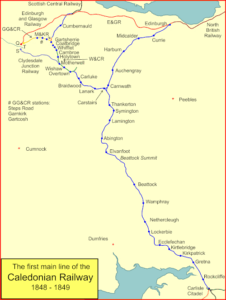
15th February 1848:  The Caledonian Railway opened its line from Beattock to Glasgow and Edinburgh.

16th February 1746:  The Rout of Moy.  The Jacobites overcame a Government Force who were attempting to capture Charles Edward Stuart at Moy Hall. The only death in the Rout of Moy was that of Donald Ban MacCrimmon, Hereditary Piper to the MacLeods of Dunvegan.
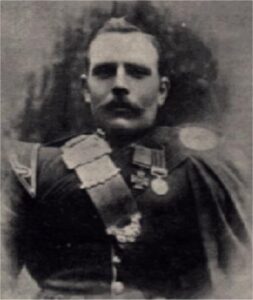
16th February 1872:  Pipe Major George Findlater VC, of The Gordon Highlanders born at Mill of Turriff, Aberdeenshire. He won the Victoria Cross at the Heights of Dargai, during the Tirah Campaign, NW India, on 20th October 1897, playing the successful attack forward after being shot through both legs.
piper george findlater vc
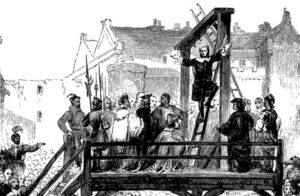
17th February 1688:  Rev. James Renwick, Covenanter, executed at the Grassmarket, Edinburgh.
17th February 1796:  James Macpherson, author of Ossian and Fingal, died.

18th February 1882:  The Scotland v. Ireland Rugby Match resulted in a 0-0 draw at Hamilton Crescent, Glasgow.

scotland v ireland
19th February 1594:  Henry Frederick Stuart, first child of James VI  and Anne of Denmark, was born at Stirling Castle in Scotland.

20th February 1472:  The Scottish Parliament annexed the earldom of Orkney and the lordship of Shetland to the Crown  “Alsua the samyn day our souverain lorde, withe deliverance of his thre estatis, annext and uniit the erledome of Orknay and the lordschip of Scheteland to the croune, nocht to be gevin away in tyme to cum to na persoune nor persounis except anerly til ane the kingis sonnis† of lauchefull bed.” This followed Christian I’s failure to pay the pledges for his daughter, Margaret’s dowry.  In 1468 Christian I of Denmark, Norway and Sweden had contracted to marry his daughter, Margaret Oldenburg, Princess of Denmark, to James III with a dowry of 60,000 florins, 10,000 florins to be paid before her departure with Orkney pledged for 50,000 florins.  By 1469 he had raised only 2,000 florins and pledged Shetland for 8,000 florins.  In 1470 The earldom of Orkney had been purchased by the Crown from the Sinclairs (Earl William) with the ruined castle of Ravenscraig in Fife in some compensation and a pension of 40 merks. Christian I’s pledges were never redeemed leading to the annexation of the Islands.   In 1540 the Scottish Parliament annexed the lorships, lands and castle of Orkney and Shetland, in 1612  again the lands of Orkney and in 1669  established the status of Orkney and Shetland as Crown Dependencies. The sovereignty of the Islands continues to be disputed.

(Note: Some sources give the date as 20th February 1471)

References:
The Records of the Parliaments of Scotland, 20th February 1472
Scotland: the later Middle Ages, Ranald Nicholson p. 417
James III: a political study, Norman Macdougal, p.91
Orkney Tourist Group – Fascinating facts
Shetland – Shetlopedia – The Shetland Encyclopaedia
Further  references here  and  here

21st February 1842:  Glasgow Queen Street Station opened initially as Dundas Street.>
21st  February 1945:  Eric Liddell, athlete and missionary, featured in “Chariots of Fire“, died in an internment camp at Weihsien, China.
eric liddell

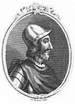
22nd February 1371:  David II died, and the crown passed to his nephew, Robert the Steward.

david ii
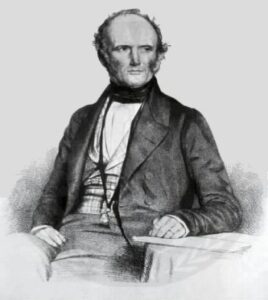
22nd February 1875:  Sir Charles Lyell, eminent Scots Geologist, died.
charles lyell

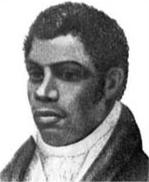
23rd February 1820:  William Davidson captured in the Cato Street Conspiracy.

23rd February 1836: The first day of the Siege of the Alamo,1836, There were four Scots born,  Richard W Ballentine, John McGregor (piper), Isaac Robinson and David L. Wilson and many of Scots ancestry among the defenders.

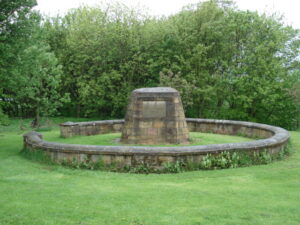
24th February 1303:  The Battle of Roslin. The action at Roslin was typical of combat in this period; a clash between relatively small groups of men-at-arms (armoured cavalry), not, as popularly written, a battle of manoeuvre involving many thousands.

rosslyn 20 21.05.06 056
Battle of Roslin Memorial
26th February 1802:  Alexander Geddes, theologian, died.

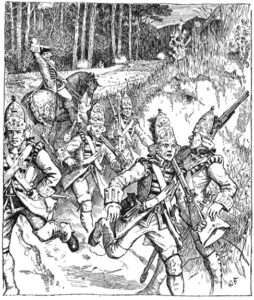
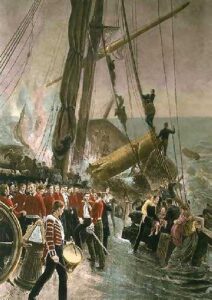
26th February 1852:   The sinking of the Troopship “BIRKENHEAD” off Danger Point, South Africa. The Ship’s Company, the Officers, Non Commissioned Officers and Men, of several units  including three Scottish Regiments stood fast with no hope of rescue as the ship sank beneath them, while every woman and child on board was saved in the few serviceable lifeboats.

HMS Birkenhead

wreck of the birkenhead
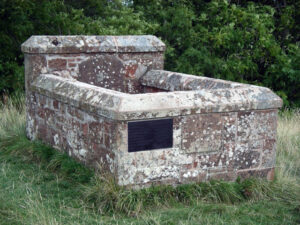
27th February 1545: The Battle of Ancrum Moor. The Scots, led by the Earl of Angus defeated a much larger English force.
ladylilliardsgraveancrummoor1545(grahamellis)sep2005
Lilliard's Stone on Lilliard's Edge
27th February 1560:  The Treaty of Berwick, a first step towards the expulsion of the French Troops  from Scotland, was signed in Berwick between the Duke of Norfolk, for England and Scottish Nobles opposed to the French occupation.
28th February 1642:  The National Covenant was signed at Greyfriars Kirkyard, Edinburgh.
july august 2007 037
29th February 1528:  Patrick Hamilton burned at the stake as a heretic in St Andrews.
29th February 1904:  The Pavilion Theatre, Glasgow, opened.