Skip to content

Events in Scottish History

January

1st January 1651:  Charles II crowned at Scone.
charles ii

1st January 1600:  Scotland celebrates the New Year for the first time on 1 January.  Until 1582 when the Gregorian Calendar was adopted, the New Year started on 25 March.

1st January 1678:  James Francis Edward Stuart, “The Old Pretender” died in Rome.
james the old pretender

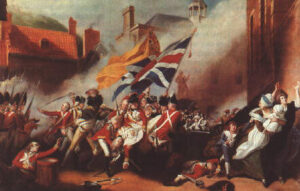
1st January 1801:  The adoption of the second and current version of the Union Flag  or Union Jack adding the cross of St Patrick to the previous version, originally a Royal Flag, which combined the crosses of St Andrew and St George on the 1800 Act of Union of Ireland with Great Britain (England (and Wales) and Scotland) coming into force. The blue was darkened in 1869 from the lighter Saltire blue as the Royal Navy found the shade more durable. 

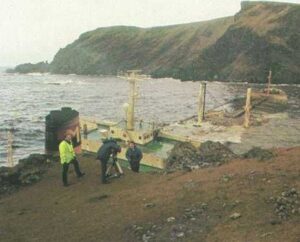
1st January 1919:  Sinking of the Admiralty Yacht “IOLAIRE” off Lewis. Early in the morning, as the Yacht, which was carrying naval ratings home from the First World War, foundered on rocks close to the shore. 205 men died.
1st January 1928:  Iain Crichton Smith, poet, who wrote in English and Gaelic, born. He died on 15th October 1988.
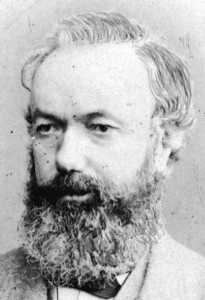
2nd January 1877:  Alexander Bain, the inventor of the “chemical telegraph”, the first “fax” machine, born at Watten, Caithness, October 1810, died at Kirkintilloch.
3rd January 1959: Edwin Muir, poet, died. He was the youngest of six children born to tenant farmers in the Orkney Islands on 15 May 1887.
4th January 1951:  Dr George Cathcart, ENT Specialist, born in Edinburgh, and sponsor of the first Henry Wood Promenade Concerts (The “Proms”), died.
5th January 1823:  Lieutenant-Colonel George Johnston died. Born on 19th  March 1764  in Annandale, Dumfriesshire,  he was briefly Lieutenant-Governor of New South Wales, Australia after leading the rebellion later known as the Rum Rebellion which deposed the Governor, William Bligh.
6th January:  Epiphany, “The Three Kings“, the twelfth day of Christmas.
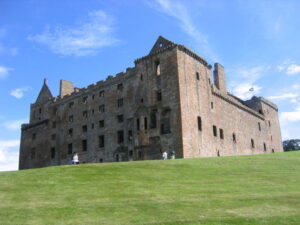
6th January 1540:  Ane Satyre Of The Thrie Estaites, Linlithgow Palace,  first presented in front of King James V and his court at Linlithgow Palace, during the Twelfth Night feast of 1540. See also University of Bielefeld, British History Scotland, The Three Estates
6th January 1781:  The 78th Highlanders, Seaforth Highlanders  later Queens Own Highlanders, The Highlanders and now 4 SCOTS  and the 83rd Regiment of Foot (Royal Glasgow Volunteers) took part in the Battle of Jersey, Channel Islands, repulsing a French invasion.
7th January 1451:  The University of Glasgow was established by a bull of Pope Nicholas V, granted at the request of James II influenced by William Turnbull, Bishop of Glasgow. He in turn secured a charter from James II in 1453 and granted one of his own which gave the University great privileges including freedom of jurisdiction and exemption from taxes. This was Scotland’s second university. St Andrews was the first in 1412. Aberdeen would be the third in 1494, and Edinburgh the fourth in 1582. England then had 2 universities.  Oxford (11th Century), Cambridge (1352).  Its third, The University of Durham was not founded until 1832.

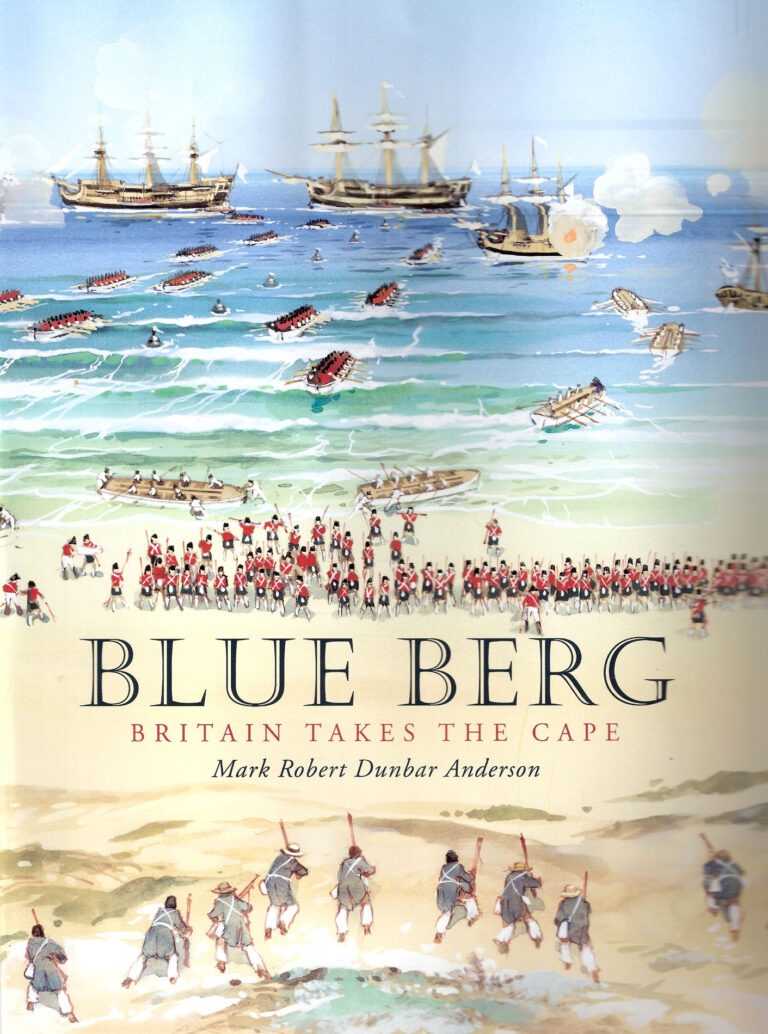
7th January 1806:  Battle of Blaauwberg (Blue Berg) took place for the Cape of Good Hope. The 71st (Highland Light Infantry), 72nd (Seaforth Highlanders) and 93rd (Sutherland Highlanders) Regiments of Foot, effected a Highland charge on the Batavian line and routed the (Napoleonic) Dutch forces,as a result of which Britain controlled the route through to India,China, and the west coast of Spanish South America via Australia.


front cover blue berg smaller
Blue Berg Britain takes The Cape by Mark Robert Dunbar Anderson published 2008.
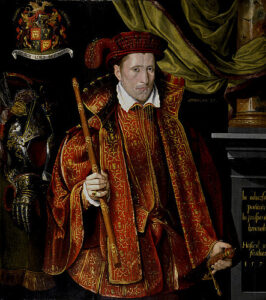
8th January 1585 (or 1586):  George 5th Lord Seton died.  Born in 1531 to George Seton, 4th Lord Seton and Elizabeth Hay. A contract for the marriage of George Seton, 5th Lord Seton and Isabel Hamilton was signed on 2 August 1550. He was educated in France.He succeeded to the title of 5th Lord Seton on 17 July 1549. On 17 December 1557 he was appointed by the Scottish Parliament to attend the marriage of Mary Queen of Scots with the Dauphin of France. He held the office of Master of the Household to Mary Queen of Scots in 1563. In 1568 he was exiled in the Low Countries after Mary Queen of Scots was defeated at the Battle of Langside. He was invested as a Privy Counsellor (PC) in 1573. He was Scottish Ambassador to France in 1583.
8th January 1746:  The Burgh of Stirling surrenders to the Jacobite Army . Ref: The Scottish Jacobite Army 1745–46 by Stuart Reid p.4 ISBN: 9781846030734

9th January 1981:  A J Cronin , best known for his “Dr Finlay” books, died. 

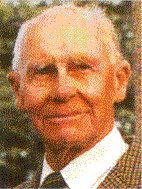
9th January 2000:  Nigel Tranter, the great Scots Historical Novelist died.  He wasborn in Glasgow on 23 November 1909 and was educated at George Heriot’s School in Edinburgh.

tranter

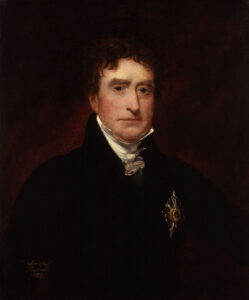
10th January 1750:   Thomas, 1st Baron Erskine prominent advocate born.

11th January 1999:  Naomi Mitchison Scottish novelist and social activist, died.
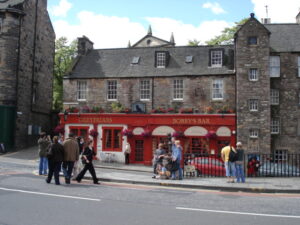
13th January 1872:  “Greyfriars Bobby” died after keeping watch for fourteen years over his Master’s grave in Greyfriars Churchyard. There is a statue of “Bobby” on Candlemakers Row, close to Bobby’s Bar. A memorial for his master John Gray “Auld Jock” was placed by American dog lovers at the until then unmarked grave and the memorial to the faithful dog is just inside the gate of the graveyard, where he was buried rather than on consecrated ground and was placed there by the  Dog Aid Society of Scotland in 1981.
july august 2007 042

15th January 1803:  Marjory Fleming, “Pet Marjory”, child writer and poet, who died in 1811 of meningitis at the age of 8, born in Kirkcaldy.

marjory fleming
15th January 1973:  Neil Gunn, author of “The Silver Darlings”, and other works on Caithness, died.
nmg
16th January 1707:  The Treaty of Union was ratified. The treaty to unite the Scottish and Westminster Parliaments was passed by 110 votes to 67, but was less than popular in the country. Crowds outside the Parliament burnt copies of the treaty, and some threw stones at the Parliament windows.  In Glasgow those opposed to the treaty held the city for over a month. The Scottish Parliament: – History – The Scottish Parliamentary Tradition – The Treaty of UnionA Parcel of Rogues in a Nation

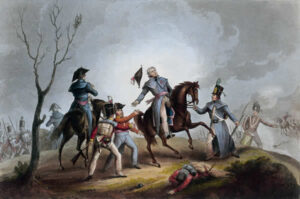
6th January 1809:  General Sir John Moore killed in action at the Battle of Elviña, La Coruña, 16th January 1809, three out of four of his Divisional Commanders were Scots, four of his Brigade Commanders were Scots, Seven Scottish Regiments took part and our ancestor Private James Noble of the Gordon Highlanders was present.

sir john moore fatally wounded

16th January 1945:  The start of Operation Blackcock, the Battle for the Roer Triangle, to break through Germany’s West Wall.  The Lothian and Borders Yeomanry take part in a successful operation to  secure Dieteren.
The 52nd Division had been trained as Mountain Troops and fought in the flattest country in Europe and wore their “Mountain Flash” throughout.
Ref “The Battle for the Roer Triangle”

52ndlowland1945
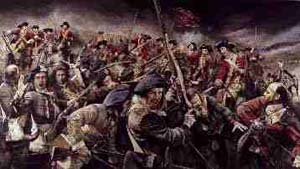
17th January 1746: The Battle of Falkirk.  The retreating Jacobite Army defeated the new Government Commander, General Hawley. He blamed his own soldiers for the defeat, accusing them of cowardice.
battleoffalkirk

17th January 1945:  5 KOSB (King’s Own Scottish Borderers) clear Oud-Roosteren during  Operation Blackcock, the Battle for the Roer Triangle.

52ndlowland1945
18th January 1792:  Sir John Pringle, pioneer of military medical services, died.

18th January 1945:  6 Cameronians establish themselves in Heilder and 5 HLI (Highland Light Infantry)  cleared Schalbruch during Operation Blackcock, the Battle for the Roer Triangle .

52ndlowland1945

18th/19th January 1945:  7/9 RS (The Royal Scots) and 4 KOSB (King’s Own Scottish Borderers) take part in Task Bear to capture Waldfeucht (in Germany) and Koningsbosch during Operation Blackcock, the Battle for the Roer Triangle .

52ndlowland1945
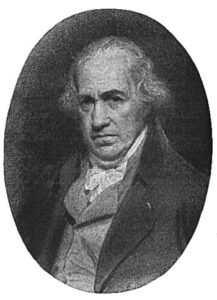
19th January 1736:  James Watt, developer of the steam engine, born in Greenock.
james watt
19th January 1945:  7 Cameronians clear the villages east of Höngen, Saeffelen and Breberen during Operation Blackcock, the Battle for the Roer Triangle .
52ndlowland1945
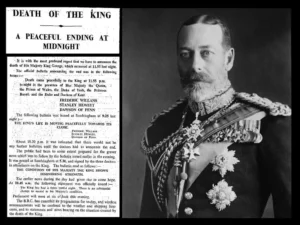
20th January 1936:  George V died at Sandringham.
20th January 1945:  6 HLI (Highland Light Infantry) attack and capture Bocket during Operation Blackcock, the Battle for the Roer Triangle . 83 PW and an 88 mm were captured. This brought the PW captured to 16 Officers and 584 other ranks since the operation began.
52ndlowland1945

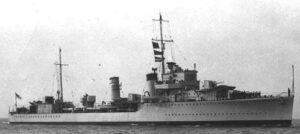
21st January 1940:  “HMS EXMOUTH” was sunk by a U-Boat in the Moray Firth with the loss of 189 lives.

21st January 1945:  The Germans counter attacked Waldfeucht during Operation Blackcock, the Battle for the Roer Triangle . 3 Companies of 5 KOSB defended the village successfully and, and were relieved by 4 KOSB by dark. 7 Cameronians captured Selsten and 1 GLAS H (Glasgow Highlanders) captured Hontem and Frilinghoven. 6 Cameronians relieved 7 Cameronians who concentrated at  Bocket and 6 Cameronians occupied Braunsrath during the night and a German counter on Selsten was resisted. 
52ndlowland1945
22nd January 1689:  William and Mary proclaimed joint sovereigns of Great Britain by the Convention Parliament.
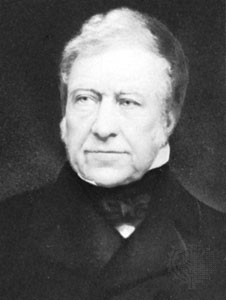
22nd January 1777:  Joseph Hume, surgeon and later politician, was born in Montrose. He died in 1885.
ihumejo001p1
22nd January 1945:  5 HLI (Highland Light Infantry) captured Laffeld during Operation Blackcock the Battle for the Roer Triangle.
52ndlowland1945
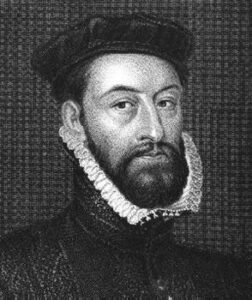
23rd January 1570:  Regent Moray shot dead by Hamilton of Bothwellhaugh at Linlithgow, initiating civil war.
regent moray
23rd January 1945:  6 HLI (Highland Light Infantry) supported by the SRY (Sherwood Rangers)  occupy the Aphoven area  during Operation Blackcock the Battle for the Roer Triangle.
52ndlowland1945
24th January 1945:  7/9 RS ( Royal Scots) and 4 KOSB of 52nd Lowland Division, having entered Germany overnight, captured Heinsberg during Operation Blackcock Battle for the Roer Triangle.  Opposition was light and a counter attack was broken up. 180 PW were captured. Haaren was occupied by 7 Cameronians.  This completed the operation, 40 small towns and villages had been captured, 23 officers and 1,112 other ranks had been captured with a further 85 PW taken  through medical channels.  The evacuation of 700 German civilians which had begun during the operation continued. The 52nd Division had suffered 752 casualties, 4 officers were killed, 1 died of wounds, and 32 were wounded, 84 other ranks were killed, 12 died of wounds and 619 were wounded.
52ndlowland1945
25th January 1759:  Robert Burns, the National Bard, born.
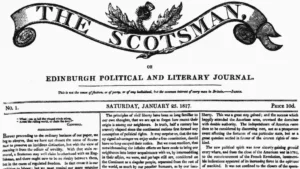
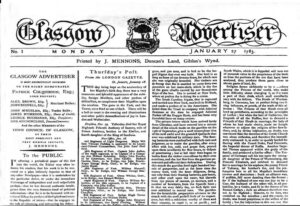
25th January 1817: The Scotsman first published.
26th January 1722:  Very Rev Alexander Carlyle Minister of Inveresk and pioneer of the Sunday School movement born the son of the local minister in Prestonpans, East Lothian. He was a witness to the Battle of Prestonpans in 1745 . He was educated at the University of Edinburgh, the University of Glasgow and University of Leiden.
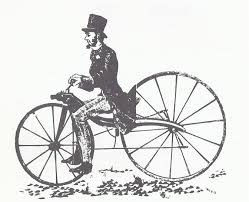
26th January 1878:  Kirkpatrick Macmillan, inventor of the bicycle, died.
macmillan bicycle
Macmillan 1839
28th January 1582: John Barclay, Scottish satirist and Latin poet born at Pont-à-Musson in Lorraine.

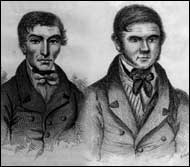
28th January 1582: William Burke, of Burke and Hare infamy, hanged in Edinburgh for the West Port Murders.

29th January 1928: Earl Haig, Commander in Chief of the British Army, 1915-1918, and founder of The Royal British Legion,  died.

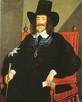
30th January 1649: Charles I executed in Whitehall, London.

charles i just before his death
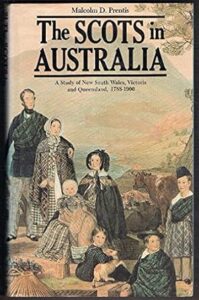
31st January 1762:  Lachlan Macquarie, known as “The Father of Australia”, was born on on the small island of Ulva in the Inner Hebrides. Lachlan was related to the last chieftain of the Clan Macquarie and to the chieftain of Lochbuy in Mull. As Governor of New South Wales from 1810 to 1822, he brought reform to the convict colony and began an ambitious building programme in Sydney.

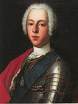
31st January 1788:  Charles Edward Stuart, “The Young Pretender”, “Bonnie Prince Charlie” died in Rome.

charles edward

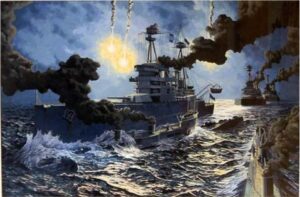
31st January 1918:  Battle of the Isle of May.  100 men died in a series of collisions between submarines in the Firth of Forth.

31st January 1919:  The Battle of George Square. 60,000 striking workers fought with police, but, as the strikers included many former servicemen, they drove the police off.  In the aftermath some 10,000 English Soldiers were sent to Glasgow, despite the presence of a Scottish Regiment at Maryhill, as the Government feared full revolution.