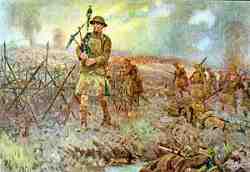
1st July 1916: Battle of the Somme saw the worst losses in the history of the British Army. Nearly 20,000 men lost their lives and more than 40,000 were wounded. The 16th Battalion of The Royal Scots (The Royal Regiment), known after their Commanding Officer as “McCrae’s Own” were in the the thick of the action and almost three-quarters became casualties, including several Heart of Midlothian footballers who had volunteered in 1914. Despite their heavy losses this battalion gained the most ground that day.
This was remembered in the week of the 90th Anniversary of the Battle by a documentary “Supreme Sacrifice”, based on Historian, Jack Alexander’s history of McRae’s Battalion, broadcast on BBC2 Scotland.
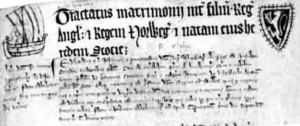
2nd July 1266: Treaty of Perth. Norway transfers sovereignty of the Hebrides and the Isle of Man to Scotland.
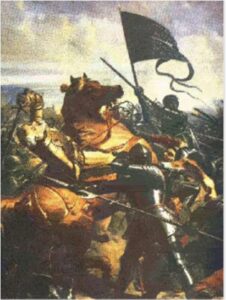
2nd July 1644: The Scots and Parliamentarian Army defeated Charles I at the Battle of Marston Moor. A Battle of the “Wars of Three Kingdoms”.
John Barker (1811-1886), Public domain, via Wikimedia Commons
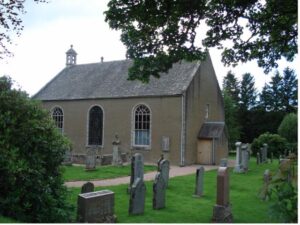
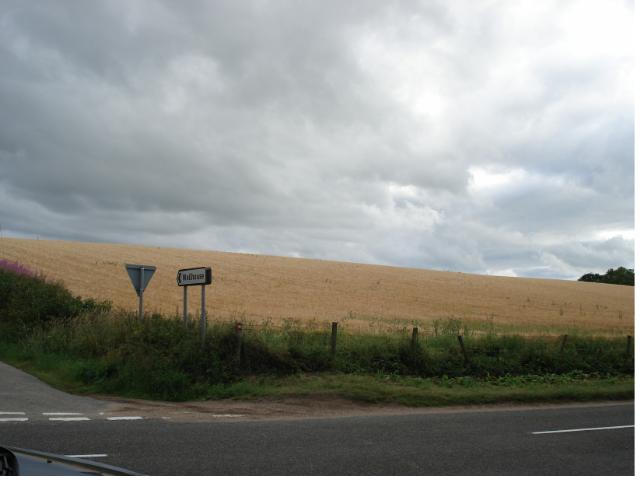
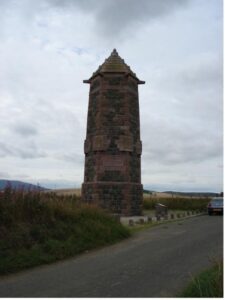
2nd July 1645: The Battle of Alford, Aberdeenshire. The Marquis of Montrose, Charles I’s Commander in Scotland defeated General Baillie’s Army on what is now called Battle Hill opposite the old West Kirk. Modern Alford grew up around the old railway station. The battle took place near the Bridge of Alford. The victory was marred by the death of George, Lord Gordon, and the Alford’s local history society has marked with a plaque the “Gordon Stane” where he lay mortally wounded .
Alford West Church
Battle Hill, Alford
3rd July 1582: James Crichton “The Admirable Crichton”, scholar, soldier and adventurer, died.
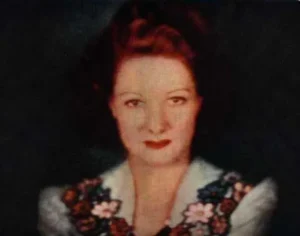
Live image of Paddy Naismith used to demonstrate Baird's first all-electronic colour television system
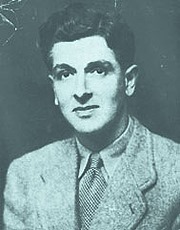
4th July 1913: Oswald Wynd, author of “The Ginger Tree”, born to Scottish Missionary parents in Tokyo. He graduated from Edinburgh University, joined the Scots Guards at the outbreak of WWII, and was commissioned into the Intelligence Corps. He was captured in Malaya and became a Prisoner of War in Japan.
5th July 1820: William John Macquorn Rankine, civil engineer, born in Edinburgh. He was the first president of the Institution of Engineers in Scotland.
By Thomas Annan / Adam Cuerden - National Galleries of Scotland, accession number: PGP R 2115.24, Public Domain,
6th July 1560: The Treaty of Edinburgh saw the withdrawal of French and English Troops from Scotland.
7th July 1930: Sir Arthur Conan Doyle author of the Sherlock Holmes detective stories, died.
8th July 1249: Alexander II buried at Melrose having died on the island of Kerrera, Argyllshire whilst preparing to take the Hebrides from Norway. Ref: A History Book for Scots, selections from Walter Bower’s Scotichronicon, p. 144 ISBN 978-1-873644-84-3
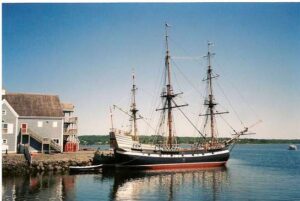
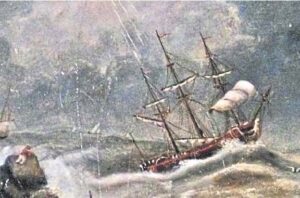
10th July 1633: The sailing ship “BLESSING OF BURNTISLAND” sank off Burntisland in the Firth of Forth carrying gold, silver and jewellery belonging to Charles I.
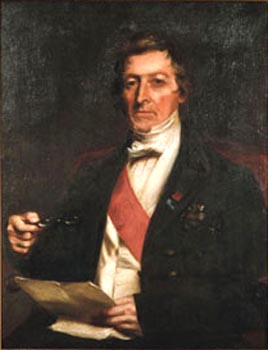
12th July 1850: Robert Stevenson, died. He is best known as a builder of lighthouses and was the engineer in charge of the construction of the Bell Rock, and grandfather of the novelist, Robert Louis Stevenson.
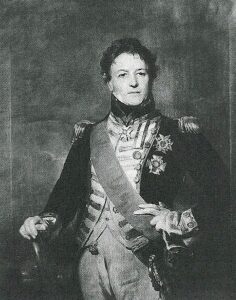
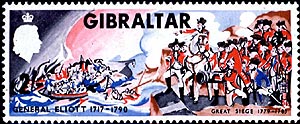
14th July 1779: The Great Siege of Gibraltar began, which would last 3 years 7 months and 12 days, ending in February 1783. Gibraltar is defended by a determined Scot, George Augustus Eliott, one of the few Scots remembered by the issue of a postage stamp outside Scotland.
18th July 1743: Three men from the 43rd Regiment (Later the 42nd Regiment and finally The Black Watch(The Royal Highland Regiment)) (now part of The Royal Regiment of Scotland) were shot at the Tower of London having been found guilty of mutiny and desertion. The Regiment were being posted to Flanders as reinforcements though they had been raised for service in the Highlands, but a rumour spread that they were being sent to the West Indies, and over 100 turned around at Finchley Common to head home. 104 were arrested near Northampton and sent to the Tower. Corporals Samuel Macpherson and Malcolm Macpherson and Private Farquhar Shaw, were shot by the Regiment of Footguards, then on duty in the Tower, unusually within the Tower, and their remains are interred under a grey and black striped marble slab by the corner of the Chapel Royal of St Peter ad Vincula. In 2010 the slab was raised, revealing three coffins. The slab was replaced without further inspection. Several of the deserters made good their escape, though one was thought to have died en route, and the remaining prisoners were posted to other regiments in the Colonies. The 43rd Regiment continued to Flanders as planned.
19th July 1333: Battle of Halidon Hill near Berwick. The Scots Army led by Sir Archibald Douglas were defeated by the English Army led by Edward III and Edward Balliol. The Scots lost some 4,000 including their leader, mainly due to the Welsh longbows.
19th July 1896: A J Cronin born, best known for his “Dr Finlay” books.
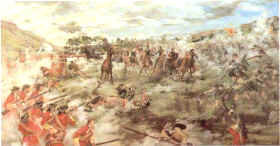
20th July 1651: Battle of Inverkeithing or Pitreavie. The Royalist Army lead by Generals Brown and Holborn was defeated by the Cromwellian Army lead by Generals Overton and Lambert.
The charge of Sir Hector Maclean's forces at the Battle of Inverkeithing
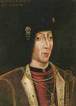
22nd July 1484: The Battle of Lochmaben Fair. A party of cavalry led by the rebel Earl of Douglas and the Duke of Albany, crossed from England and clashed with local forces loyal to James III, the Scottish king. The raiders were defeated; and while Albany managed to escape Douglas was captured, spending what remained of his life as a royal prisoner.
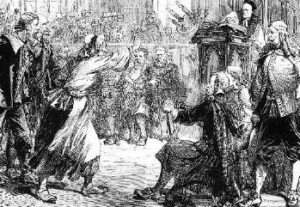
23rd July 1637: Jenny Geddes hurled her stool at the Dean of St Giles Cathedral, Edinburgh calling “Daur ye say mass at my lug?”, protesting at the new unpopular form of service introduced by Charles I, which led to the signing of the National Covenant.
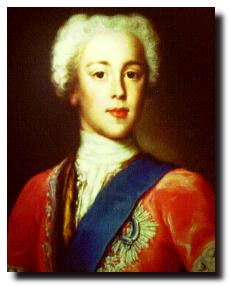
23rd July 1745: Prince Charles Edward Stuart “The Young Pretender”lands on Eriskay with eight supporters, no supplies and no funds at the start of the ’45 Rising
23rd July 1773: Sir Thomas Makdougall Brisbane (1773-1860), 6th Governor of New South Wales, was born at Brisbane House, near Largs, Ayrshire.
24th July 1411: The Battle of Harlaw. In a dispute over the Earldom of Ross, Donald II, The Lord of the Isles brought the Highland Army into Aberdeenshire, where the Earl of Mar gathered his forces at Inverurie to prevent them attacking Aberdeen. The action was intense, but though no clear victor emerged, the Highland Army withdraw to the Highlands and Aberdeen was safe. The battle is remembered in folklore and song.
26th July 1513: James IV in response to a request from France in accordance with the “Auld Alliance” declared war on England, sending a letter to Henry VIII with the Ross Herald. James was also displeased at the English seizure of two Scottish ships in a dispute over the payment of the dowry for his wife, Margaret Tudor. This would lead to the disaster at Flodden in September that year, when James and “The Flower of Scotland” were to lose their lives.
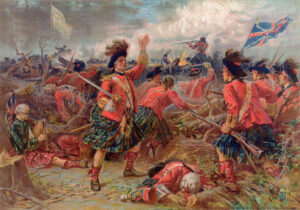
27th July 1689: The Battle of Killiecrankie. The Government sent an Army north under General Mackay to stop the advance of the Jacobite Army led by John Graham of Claverhouse, “Bonnie Dundee”. The Armies met at the pass of Killiecrankie, near Blair Atholl, and the Government soldiers were scattered by a Highland charge lead by Claverhouse. Their victory was short lived as John Graham was felled by a ball from a leather cannon carried as light artillery by the Government infantry, and his Army was subsequently defeated at Dunkeld. The bullet hole in his breastplate now at Blair Castle is a later addition for dramatic effect.
27th July 1689: The Battle of Killiecrankie. The Government sent an Army north under General Mackay to stop the advance of the Jacobite Army led by John Graham of Claverhouse, “Bonnie Dundee”. The Armies met at the pass of Killiecrankie, near Blair Atholl, and the Government soldiers were scattered by a Highland charge lead by Claverhouse. Their victory was short lived as John Graham was felled by a ball from a leather cannon carried as light artillery by the Government infantry, and his Army was subsequently defeated at Dunkeld. The bullet hole in his breastplate now at Blair Castle is a later addition for dramatic effect.
28th July 1683: Anne Stuart married Prince George of Denmark. The second daughter of James II, she was raised a protestant by her uncle, Charles II. None of her children survived her, and she died without an heir.
30th July 1547: The Protestants who were responsible for the murder of Cardinal David Beaton surrendered St Andrews Castle to French forces. Cardinal Beaton had executed Protestant Preacher George Wishart in 1546 and the Protestants leaders reacted by seizing the castle and killing Beaton. They held out for a year. One of their number, John Knox, served subsequently for 19 months on French galleys, but eventually he and the others, but for one who died either escaped or were released.
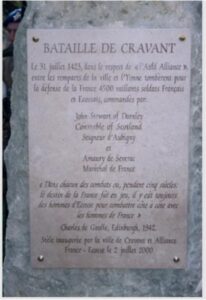
31st July 1423: Battle of Cravant. 4,500 French and Scots soldiers, commanded by John Stewart, Earl of Buchan and Seigneur of Aubigny fell in defence of the town against the English.
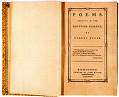
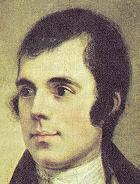
31st July 1786: First publication of the “Kilmarnock Edition” of the poems of Robert Burns “Chiefly in the Scottish Dialect”.








.jpg "July")
.png "July")

_School_-_Matthew_Stuart_(1516%E2%80%931571),_4th_Earl_of_Lennox_-_1129108_-_National_Trust.jpg "July")
_-_Google_Book_Search_-_Biographical_Sketch_of_the_Late_Robert_Stevenson.jpg "July")









#/media/File:Robert_George_1956.jpg "July")