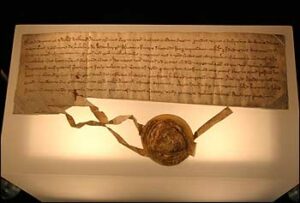
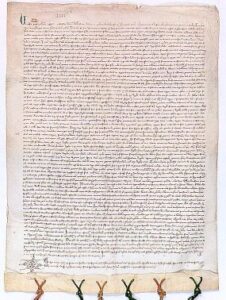
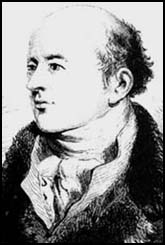
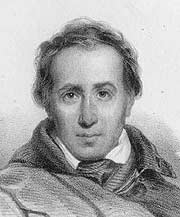
11th October 1297: Andrew Moray and William Wallace write to the merchants of Lübeck and Hamburg, advising that “…that they can now have a safe access with their merchandize to all harbours of the Kingdom of Scotland, because the Kingdom of Scotland has, thanks be to God, by war been recovered from the power of the English.”
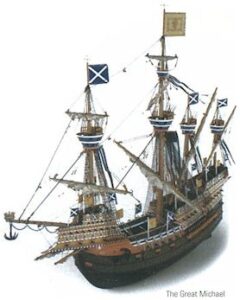
12th October 1511: The “GREAT MICHAEL” was launched for the James IV‘s Navy.
At 1,000 tons she was twice the size of England’s “MARY ROSE”.
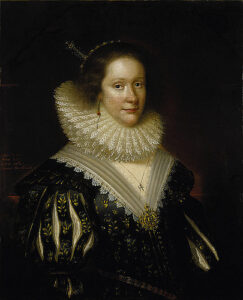
12th October 1609: A contract was signed by which Lady Mary Erskine, born 1597 would marry William Keith, 5th Earl Marischal and become Countess of Marischal. She died after 1626.
14th October 1821: Eyemouth Fishing Disaster: a storm killed 129 of the East Berwickshire town’s fishermen.
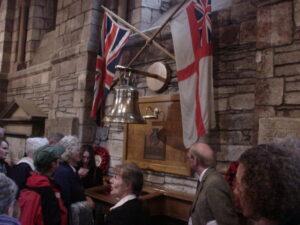
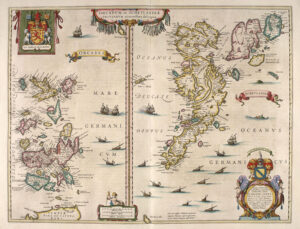
14th October 1939: German submarine U47 commanded by Gunther Prien sank HMS ROYAL OAK in Scapa Flow, Orkney, with the loss of 833 lives. Shortly before 0100 hrs Prien fired his first salvo, causing minor damage to the bow. 20 minutes later, having reloaded the second salvo hit amidships. The U47 escaped through the narrow channel through which she had entered.
Memorial to HMS ROYAL OAK in St Magnus Cathedral, Kirkwall, Orkney
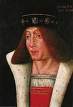
16th October 1430: James II born. His father, James I, was murdered when he was 6. He was crowned at Holyrood in 1437, and killed by an exploding cannon at the siege of Roxburgh Castle in August 1460.
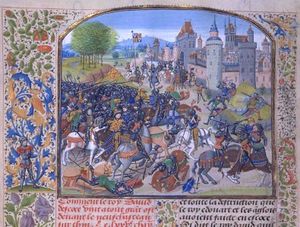
17th October 1346: The Battle of Neville’s Cross. The English Army of about 700 men at arms, 10,000 archers and other troops had picked the favourable ground and the Scots invaders, between 10 and 15,000 were at a disadvantage from the start. About 1,000 Scots were killed and many captured, including David II. He wore the Black Cross of Scotland to the Battle and lost it to the English. For the next 200 years the cross was given pride of place in Durham Cathedral’s relic collection.
17th October 1921: George Mackay Brown, Orkney poet, author and dramatist born. He died on 13th April 1996..
18th October 1541: Margaret Tudor, sister of Henry VIII of England and wife of James IV, died..
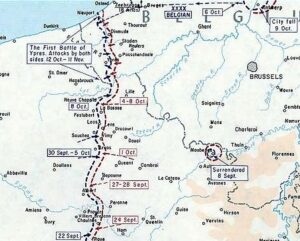
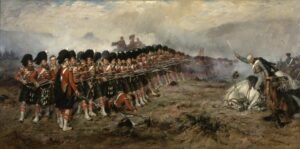
19th October 1914: First Battle of Ypres. The 7th Division (which included 2nd Bn The Scots Guards, 2nd Bn The Gordon Highlanders and 2nd Bn The Royal Scots Fusiliers) fought the advancing German Army to a standstill during the Battle.
21st October 1805: The Battle of Trafalgar. 7% of Nelson’s force were Scots. 5 of his 27 captains were Scots, the surgeon who attended his fatal injury was Scots, as was the woman who embalmed his body, and the youngest sailor a 10 year old cabin boy from Leith. Many of the fleet’s sails were from the jute mills in Dundee, and a number of the fleet’s cannon were from the Carron iron works in Falkirk.
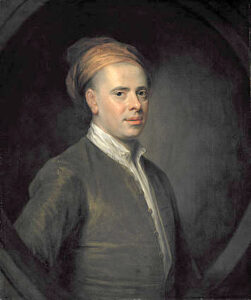
22nd October 1775: Dr Alexander Murray, distinguished orientalist, born Dunkitterick, Kirkcudbright.
23rd October 1295: The ‘Auld Alliance’ treaty was signed between John Balliol, King of Scots, and Philippe IV of France. It provided for mutual military help against the English and was renewed by Robert The Bruce in 1326. It was a military and diplomatic alliance but for most it brought benefits such as pay as mercenaries in France’s forces and trade which brought French wine to Scotland.
24th October 1765: Sir James Mackintosh born at Aldourie, near Inverness.He trained as a doctor and barrister, but also became a journalist, judge, administrator, professor, philosopher and politician.
25th October 1415: The Battle of Agincourt (Azincourt). A smaller English Army (about 9,000) lead by Henry V defeated a larger French Army (about 12,000) including, it is said, some Scots and Bretons, following which the French invoked the “Auld Alliance“. Sir Alexander Buchanan was sent over with a force of 7,000, and six years later the Franco-Scottish Army defeated the English at the Battle of Baugé, where Buchan killed the English King’s brother, the Duke of Clarence. The Scots fought with the French against the English to the end of the “Hundred Years War”. Shakespeare has Capt Jamy, a Scot, in Henry V’s Army. James I was a captive in England at the time and with Henry V at the Siege of Melun, in 1420, when he tried to persuade the Scots to surrender.
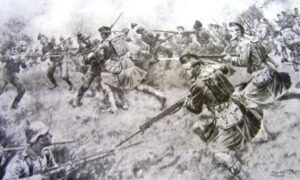
31st October 1914: The London Scottish saw its first action “Hallowe’en”. They were the first Territorial Battalion to see action in WWI. They held the Wytschaete-Messines ridge against German regulars for hours sustaining 400 casualties.

.jpg "October")
.jpg "October")